

Precision medicine is reshaping oncology by shifting treatment selection from histology alone to the molecular architecture of each patient’s tumor. Platforms designed to identify actionable somatic biomarkers now match patients to targeted therapies based on genomic alterations, receptor expression, and immune markers.1, 2 In turn, precision-guided treatment informed by comprehensive molecular profiling has shown improved outcomes in children with high-risk cancers and in adults with advanced solid tumors. 3, 4
And yet, for patients, this progress rarely feels simple. 2 Published estimates suggest that only 5-15% of patients with identified actionable alterations ultimately receive a molecularly matched therapy. The gap between what precision medicine can identify and what patients can access remains one of the most consequential failures in modern oncology.
Even when a biomarker is identified, translating that result into care can still be difficult because implementation barriers may include limited infrastructure, clinician uncertainty, and practical obstacles in biomarker testing pathways. 5
That is the fault line this moment in oncology must confront. Precision medicine should not be judged only by the sophistication of its assays or the novelty of its targets. It should also be judged by whether it improves patient understanding, decision-making, access, and outcomes.
“Precision medicine has fundamentally redefined what it means to receive a cancer diagnosis. A generation ago, a diagnosis of ‘lung cancer’ or ‘breast cancer’ pointed you down a relatively narrow treatment corridor: surgery, chemotherapy, radiation, in various combinations,” says Dr. Ildikó Csiki. “Today, that same diagnosis is just the beginning of a molecular investigation. We now stratify cancers not just by organ of origin but by their mutational signatures, receptor expression, tumor mutational burden, microsatellite instability status, and increasingly by the tumor microenvironment itself. This has created an entirely new layer of decision-making for patients and their care teams.”
At Wondrlink, the patient-centered precision medicine and access platform she founded, Dr. Csiki sees the consequences of that shift up close. Precision medicine, she argues, is both a gift and a burden: it has dramatically expanded the therapeutic landscape, creating new pathways for patients who might once have been told there were no options left, while also confronting them with genomic reports and treatment decisions that are extraordinarily difficult to interpret alone. And, if the science has moved quickly, the patient infrastructure around it has not.
“Precision medicine has created extraordinary new options, but without the infrastructure to help patients understand and reach them, those options remain out of reach for far too many people,” she says.
Communication is a Clinical Problem
Precision oncology introduces highly technical concepts into some of the most emotionally charged conversations in medicine. Patients are asked to make sense of tumor mutational burden, microsatellite instability, somatic versus germline findings, pathogenic versus uncertain variants, and “actionable” biomarkers while trying to answer a much simpler question: does this change what happens to me now?
The evidence suggests the field still underestimates how difficult this is. Empowering patients in precision oncology requires knowledgeable clinicians, better information management, and continuity of care regardless of biomarker outcomes. 2 From the systems side, better uptake of biomarker testing depends on practical implementation strategies rather than simply ordering more tests. 5
“The challenge is both cognitive and emotional, and I think we underestimate the emotional dimension. When a patient receives a next-generation sequencing report showing an actionable mutation…the immediate question is not ‘what does this mean scientifically?’ It is ‘does this mean I have hope?’” Dr. Csiki said.
This is why communication in precision medicine is not secondary; it is part of care delivery itself. A sequencing platform can be analytically brilliant and still fail at the bedside if its output does not become usable knowledge for the patient and care team.
There are signs this can improve. In lung cancer, an ultrafast biomarker-testing workflow showed that a structured, molecular-tumor-board-centered process could deliver comprehensive molecular reports within 72 hours, underscoring how workflow design and communication discipline can directly affect feasibility in real clinical settings. 6
Access: The Real Break in the System
Even when testing works, patients often hit the next wall: access. Precision medicine may identify a plausible therapy, but that option may remain trapped behind trial eligibility criteria, expanded access paperwork, reimbursement barriers, geographic distance, institutional silos, or lack of visibility. A 2025 systematic review and meta-analysis found that molecular tumor boards do produce clinical value, but also revealed major heterogeneity in implementation, definitions of actionability, and follow-through into actual patient benefit. 7
As Dr Csiki put it, “Patients are not dying because the therapies do not exist. They are dying because the infrastructure to connect them, across geography, across institutional walls, across financial barriers, across information asymmetries, has not been built.”
That is the point where Wondrlink becomes more than a mention in the access conversation. It becomes a lens through which precision medicine itself can be re-read.
Precision Medicine Through the Wondrlink Lens
Wondrlink’s core insight is that precision medicine is not failing for lack of science. It is failing at the point where science is supposed to reach the patient.
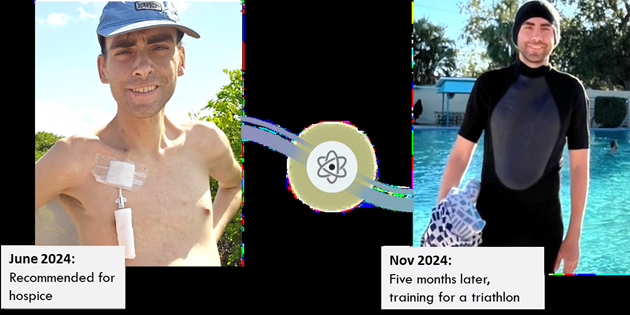
Wondrlink defines its purpose in three parts: identifying therapies beyond standard care, navigating what it calls the “impossible system” of clinical trials, compassionate use applications, FDA filings, payer negotiations, and institutional barriers, and democratizing access to precision medicines regardless of geography, income, or insurance. Wondrlink has navigated more than 50 patients so far at no cost to those patients.
That framing matters because it pushes precision medicine away from an overly narrow focus on testing alone. A molecular result is only useful if it can be translated into a pathway. Wondrlink’s flagship initiatives are each designed to close a specific failure point in that translation chain. The Clinical Trials and Precision Therapeutics Engine aggregates trials, expanded access programs, and precision-matched therapies into a single independent platform, addressing the fragmentation that forces patients and oncologists to search across dozens of disconnected databases. The Compassionate Use Database creates transparency around pharmaceutical companies’ policies for pre-approval access, a domain where information asymmetry directly costs lives. The AI Health Concierge interprets the patient’s full clinical picture rather than simply matching eligibility criteria to protocols, recognizing that the medically right trial for a given patient depends on far more than a single biomarker. And WondrVoices integrates patient support with systemic advocacy, ensuring that the insights generated at the individual patient level feed back into policy and practice.
Wondrlink Foundation, a 501(c)(3) nonprofit, defines its purpose in three parts: identifying therapies beyond standard care, navigating what it calls the ‘impossible system’ of clinical trials, compassionate use applications, FDA filings, payer negotiations, and institutional barriers, and democratizing access to precision medicines regardless of geography, income, or insurance. The Foundation has navigated more than 50 patients at no cost to those patients.
“I helped develop drugs that are saving lives today. I’ve also sat with many patients who couldn’t access them. Wondrlink exists to ensure patients can reach them, ” Dr. Csiki reflects.
Patient Perspective is Part of Scientific Rigor
According to existing literature, integrating patient-reported outcome measures into cancer care may improve both overall survival and health-related quality of life. 8
Dr. Csiki extends that logic directly into precision oncology. She argues that patient insight should shape trial design, endpoint selection, real-world evidence generation, and long-term assessment of treatment impact. If precision medicine begins from the premise that every patient’s biology is unique, then each patient’s lived experience of treatment, toxicity, travel burden, time pressure, and uncertainty should also inform how benefit is measured.
The current trial ecosystem still relies heavily on RECIST-defined tumor response and progression-free survival as primary endpoints. These metrics capture radiographic and temporal dimensions of disease control, but they do not reliably reflect what patients themselves experience or value: functional capacity, symptom burden, cognitive clarity, the ability to maintain work or caregiving roles, time spent traveling to and from trial sites. If precision medicine individualizes biology, it should also individualize outcome measurement. Patient-reported endpoints are not a concession to subjectivity. They are a necessary expansion of what counts as evidence.
That is also why Wondrlink places such emphasis on community oncology. Dr. Csiki notes that more than 70% of US cancer care is delivered in community settings, yet those practices often lack the research infrastructure, databases, and dedicated staff to connect patients to investigational options. Critically, community oncologists may order comprehensive genomic profiling but lack the time or subspecialty expertise to interpret complex reports and identify the full range of therapeutic implications, especially for rare variants or emerging biomarker-drug associations. This is the precise gap where AI-assisted clinical interpretation, designed to synthesize a patient’s complete molecular, clinical, and logistical profile, could transform community oncology from a diagnostic endpoint into a therapeutic launchpad. She positions Wondrlink as a bridge between community oncology, academic cancer centers, and biopharma development, arguing that this can improve not only access but also enrollment diversity and relevance.
Implementation
A major lesson from recent years is that implementation is not what happens after precision medicine. It is part of precision medicine.
A 2026 JCO Oncology Practice study found that the addition of a precision medicine navigator in prostate cancer care was associated with substantially higher tumor genomic testing rates, including among Black patients, although disparities remained. 9 The latter lands especially hard in the patient perspective frame. Navigation is not peripheral to precision oncology. In many settings, it is part of what makes precision oncology work.
“Precision medicine is, by definition, a multi-stakeholder endeavor,” Dr. Csiki says. No single institution can independently generate the genomic data, run the trials, navigate the regulatory pathways, solve the financial barriers, and support the patient through the whole process. Her answer is what she calls an “orchestration layer” between the patient, the community oncologist, the academic trial site, the pharmaceutical company, the payer, and the regulatory system.
Closing the Gap Between Possibility and Reality
Precision medicine has already earned its place as one of oncology’s most powerful promises. But promise is not the same thing as delivery. A mutation on a report is not access. A trial match is not treatment. A scientific breakthrough is not a patient benefit if the person who needs it cannot reach it.
That is why the next chapter of precision oncology will be judged less by what science can discover than by what the system can actually deliver. The institutions, platforms, and partnerships that matter most in this era will not be the ones that simply generate the most data. They will be the ones that turn complexity into clarity, possibility into pathways, and innovation into access.
Seen through the patient lens, that is where Wondrlink’s work becomes most consequential. It becomes an argument about what precision medicine still lacks: not better science, but better infrastructure to connect patients. Better navigation. Better transparency. Better support. Better odds that when a patient asks whether an option exists, the answer is not lost somewhere inside the system.
“We are at a founding moment for precision medicine access,” Dr. Csiki says. She argues that while the scientific tools are maturing rapidly, what remains missing is the infrastructure to connect them into a functioning system for patients. “Every patient deserves to know their options. We make sure they find them.”
And that may be the sharpest test of all: precision medicine will not fulfill its promise when it becomes more sophisticated. It will fulfill its promise when it becomes reachable. Wondrlink was founded to ensure that it does.
For more information and free patient resources, visit the Wondrlink Foundation’s official website. Additional support and resources for patients are also available at www.wondrlink.com.