
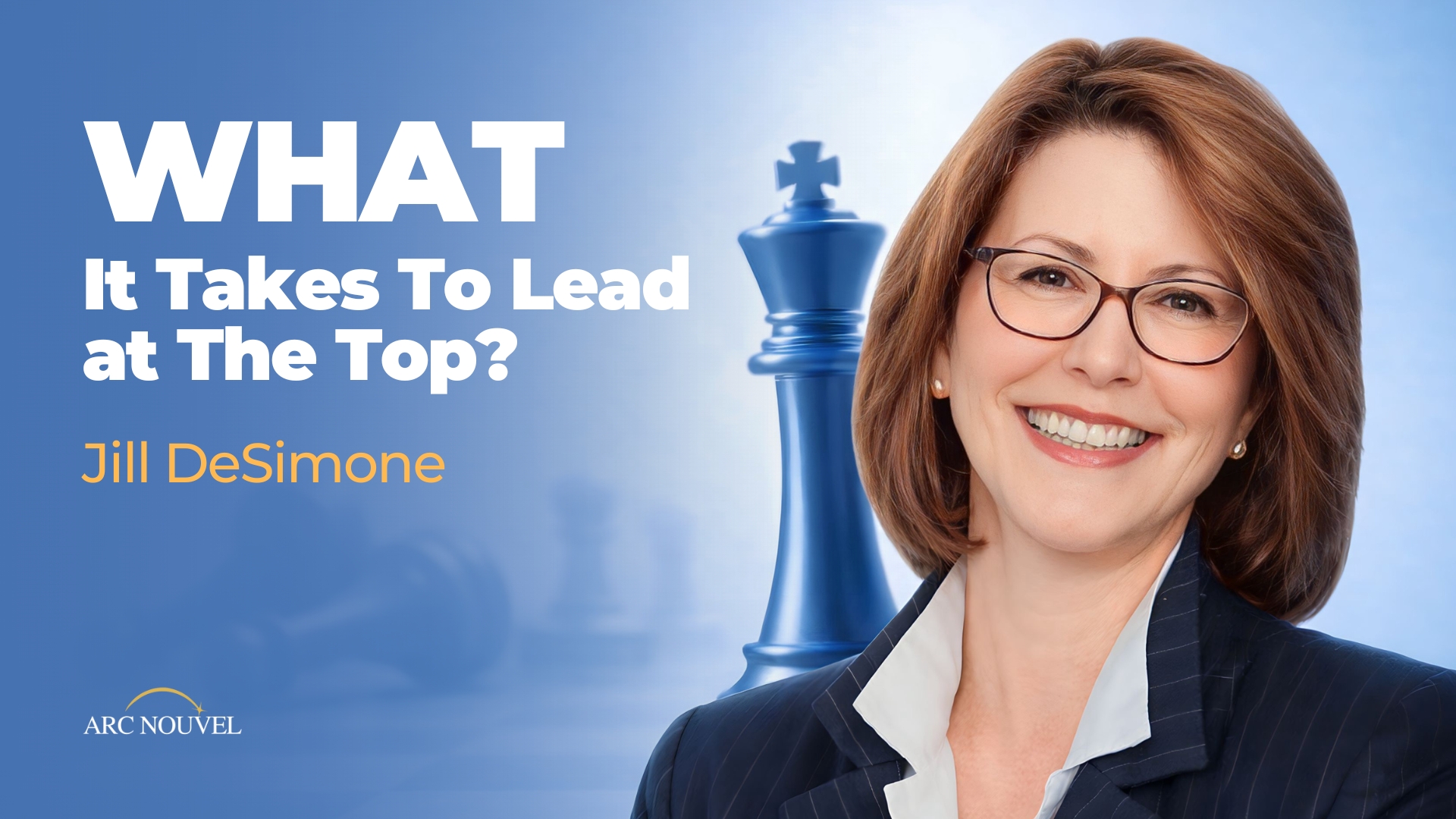

In every industry, there are executives who build impressive careers. And then there are leaders whose careers become a study in impact: not only in terms of business performance, but in the lives they shape, the standards they set, and the people they help grow along the way.
Jill DeSimone belongs firmly in the second category.
Over more than four decades in the pharmaceutical industry, she built a career that spanned some of the sector’s most consequential therapeutic areas and some of its most influential organizations. A pharmacist by training, she went on to hold major leadership roles across Bristol Myers Squibb, Teva, and Merck, contributing to businesses in oncology, HIV, cardiovascular disease, diabetes, and global commercialization. Since retiring in 2022, she has continued to serve the industry through board roles and nonprofit work, remaining closely connected to the mission that first drew her into healthcare: helping patients.
At a time when business language often celebrates scale, speed, and disruption above all else, DeSimone brings the discussion back to fundamentals: who you are, what you stand for, and how others experience your leadership.
That may be precisely what it takes to lead at the top.
I Wanted to Help People
For many senior leaders, the origin story is retold as a sequence of promotions. For DeSimone, it begins with the desire to make a larger difference.
“I’m a pharmacist,” she says. “And when I graduated pharmacy, I wanted to try to make a bigger impact than just being in a pharmacy or a hospital. And so I went into industry.”
That decision would shape the trajectory of an extraordinary career. Yet what is striking is that she still describes it in moral rather than corporate terms. She did not enter pharma because it was prestigious. She entered it because it expanded the scale of service.
“I wanted to help people, I wanted to help patients,” she reflects. “And I really love the fact that we were able to bring so many innovative products to patients.”
This orientation toward patient impact became the through-line of her career. Across therapeutic areas and organizations, she remained focused on what innovation means when it reaches the person who needs it.
“And then my kind of final journey was with Keytruda in oncology,” she says. “And that was really great when somebody says to you, ‘I’m alive today because of the drug that I took.’ It’s an amazing feeling.”
That is not a metric. It is a moment of truth.
Too often, leadership narratives in pharma drift toward abstraction: market share, portfolio optimization, pipeline acceleration. Those matter. But DeSimone’s reflections remind us that the best leaders in healthcare never lose sight of the end beneficiary. Their ambition is disciplined by purpose. Their work is measured not only in organizational success, but in lived patient outcomes.
Authenticity, Trust, Integrity
Many people can manage a team. Far fewer can create the kind of followership that makes people want to do their best work.
For DeSimone, the difference lies in qualities that are often discussed casually but lived too inconsistently: authenticity, trust, and integrity. In her view, these are not soft ideals orbiting around leadership. They are the foundation of it.
“Authenticity for me is probably the most important,” she says. “It’s who you are. It’s your authenticity that people can count on you that makes you somebody that people want to follow and people want to learn from.”
There is a subtle but important distinction in that statement. Authenticity is not presented as self-expression for its own sake. It is presented as reliability. People follow leaders not merely because those leaders are impressive, but because they are consistent. They know what that person stands for. They know where they stand with them.
DeSimone extends that principle directly into trust. “The second thing is building a set of principles around trust,” she says. “They follow a leader and want to work with a leader that they trust. And trust is about extending trust, listening to learn, being very genuine.”
That phrase — listening to learn — captures much of what is missing in performative leadership cultures. Trust is not built through charisma alone. It is built through how leaders listen, how they respond, and whether their teams feel seen rather than managed.
And then comes integrity, which DeSimone frames not as abstract virtue but as practical credibility: “The last thing that’s always been important to me is being a person with high integrity. So when people think about me, if they’re asking me a question, they’re getting an answer.”
In highly regulated, high-stakes sectors like pharma, this kind of credibility becomes especially important. When decisions affect patients, employees, and investors at once, ambiguity in leadership is costly. People do not need perfection from leaders. They need honesty. They need coherence between words and actions.
DeSimone also emphasizes that trust must exist not only between leader and individual, but as a shared condition within the organization itself. She speaks of “taking time to build a common platform of trust within an organization.” That phrasing matters. Trust is not accidental culture. It is intentional architecture.
What emerges from her perspective is a demanding standard. To lead at the top is not only to make decisions. It is to become a person whom others can believe, follow, challenge, and rely on. Titles may confer authority. Authenticity, trust, and integrity confer legitimacy.
Breaking Ground, then Making Sure Others Can Walk Through
When DeSimone entered the industry, there were far fewer women in leadership. She remembers that reality clearly.
“There weren’t a lot of women in industry,” she says. “And so for me, it was very motivating. I felt the responsibility that I had to make sure that more women would have a path forward.”
That response is revealing. Some people experience being underrepresented and focus understandably on surviving the environment. DeSimone seems to have asked a second question as well: how do I help widen the path for others?
“I felt motivated by that and I felt encouraged to help more women,” she says. “And it was a journey that I’ve been on for my whole career is to help others continue to achieve their career objectives.”
Even her phrasing carries a sense of continuity. Helping others was not a side activity added later in a successful career. It became part of the career itself.
“And it was fun to pave the way,” she adds.
There is power in that last sentence. Not bitterness. Not self-congratulation, but a joy.
This helps explain why people development remains such a central part of how DeSimone defines her legacy. Throughout the conversation, one senses that leadership, for her, is not simply about building businesses. It is about building people strong enough to lead after you.
Breaking barriers matters. But DeSimone’s example suggests something even more durable: the mark of true leadership is not that you arrived alone. It is that you made it easier for others to rise with you.
Work-Life Balance
In conversations about executive success, work-life balance is often treated as a private issue, separate from performance. DeSimone rejects that separation. Her view is more mature and more demanding: balance is not indulgence. It is part of leading well.
“It was skewed toward work,” she says candidly of her own earlier career. “But one of the things I came to realize [was] that I was a better leader if I took time to spend with my family or took time to have a break.”
The sentence carries no pretense. She does not romanticize the past. She acknowledges the imbalance, then articulates what experience taught her.
“You’re able to recharge and you’re able to get some personal peace,” she says. “And then you are recharged and you’re better for your team if you come to the conversation with that centered good energy.”
That idea — centered good energy — may sound deceptively simple, but it names something every team recognizes and every strong leader eventually learns. Exhaustion is contagious. So is steadiness. The emotional condition a leader brings into a room affects everyone else in it.
DeSimone’s answer also moves quickly from personal recharge to organizational practice. She describes herself as “not a reactive leader, but a planful leader because then you don’t have chaos.” The point is not merely efficiency. It is the creation of stability.
“You don’t have chaos in your own personal life and you provide your team a sense of stability,” she says.
That distinction matters enormously in modern executive environments, where urgency can become a culture and busyness can masquerade as importance. DeSimone argues, implicitly, for another model: the disciplined leader who protects focus, creates predictability where possible, and respects the bandwidth of others.
“I try to be respectful of people’s time,” she says. “I tried not to send emails over the weekend so that they could have their personal time.”
This is a small operational detail with large cultural consequences.
DeSimone also notes that when starting with a new team, she would often have an explicit conversation about “how are we going to work together so there are no surprises.” This is leadership as design, not improvisation.
The deeper point is this: balance is often framed as what leaders need for themselves. DeSimone frames it as what teams need from leaders. And that reframing may be one of the most practical insights in the entire conversation.
The Hardest Decisions Reveal Who the Leader Really is
There are moments in every senior career when strategy becomes painfully human.
When asked about the most difficult challenges she faced, DeSimone does not point first to competition, complexity, or market pressure. She points to reorganizations, failed programs, and the need to let people go.
“The difficult challenges has to do with when you have to do a reorganization,” she says. “You have to let people go. And you recognize that there’s a piece of this that has to be done for the company, but then there’s a human side.”
That tension, business necessity on one side, human consequence on the other, is where many leaders reveal their true operating code. DeSimone’s response is not sentimental, but it is deeply humane.
“It really got me to understand about being honest and transparent with people because you want to make sure that they understand the why,” she says. “And it’s not personal.”
In other words, difficult decisions do not excuse poor leadership behavior. They demand better leadership behavior.
DeSimone extends this same seriousness to decision-making more broadly. “You have to, first of all, gather information from a diverse set of people,” she says. “Make sure that you’re reaching out to people that have different points of view than you.”
Then comes the next level of rigor: scenario thinking. “Lay out those scenarios. What are the options that could happen? What are the pros and cons? And then how do you want to move forward?”
Earlier in the discussion, she makes a related point with unusual clarity: planning still matters in fast-moving industries, but planning must include optionality. “Planning, but you have to have options. So you have to do scenario planning,” she says. “If you have optionality, then you’ve thought about all the different possibilities and you’re not blindsided.”
She also warns against the fatal complacency that can quietly settle into successful organizations. “This will never happen to us,” or “this isn’t how we do it” are, in her framing, dangerous phrases.
At the highest levels, then, leadership is not about speed alone. It is about judgment under uncertainty. It is about hearing diverse voices without becoming paralyzed, planning without becoming rigid, and acting decisively without losing sight of people.
And perhaps most of all, it is about resisting the arrogance that success can breed.
The Future Belongs to Leaders Who Can Blend Technology with Judgment
Few sectors will be transformed by AI as profoundly as life sciences. Drug discovery, trial design, commercialization, data analysis, and operational modeling are all being reshaped. DeSimone sees that shift clearly.
“The transformation that’s happening with AI,” she says, is already evident “when you see pharma companies buying and partnering with AI companies to try and develop drugs faster.” She also sees major implications “on the commercial side,” especially in rethinking more integrated models of commercialization.
But what is most interesting in this part of the discussion is not technological optimism alone. It is the insistence that technology, no matter how powerful, does not replace experienced judgment.
“So it’s the blending,” she says. “It’s an accelerant for sure, it accelerates things. It’s a good partner… It pushes your thinking, but it can’t replace your experience and the personal touch.”
That is the nuance many industries are still struggling to articulate. The future is not a contest between human capability and machine capability. It is a test of integration: how wisely leaders use tools without surrendering discernment.
According to DeSimone, AI may help generate options, stress-test assumptions, and process vast information. But the leader still has to interpret, prioritize, contextualize, and decide.
And that requires something machines do not possess: lived accountability.
Her perspective is refreshingly free of both fear and hype. Technology should not be dismissed. Nor should it be worshipped. The leaders of the future will be those who can work fluently with new tools while preserving the human capacities that remain decisive: judgment, experience, empathy, narrative intelligence, and moral clarity.
Resilience, Stretch, and the North Star
Asked what the next generation of leaders should develop now, DeSimone returns to a word that feels increasingly central to leadership in every field: resilience.
“Resilience… it’s how you respond to events,” she says. “Everything is a learning opportunity.”
This is not resilience as toughness theater. It is resilience as reflective capacity, the ability to metabolize challenge into growth rather than merely endure it.
“Things are going to go wrong,” she says. “But it’s how you deal with it that makes you stronger and really has you learn.”
She pairs that with a second imperative: seek stretch. “Make sure you put yourself into situations where you stretch yourself,” she advises. “When you go into a stretch assignment, it’s uncomfortable, but it challenges you and you learn new things.”
This is one of the clearest markers of leaders who continue to rise: they do not wait until they feel fully ready. They enter assignments that demand more of them than their current confidence can comfortably support.
Yet DeSimone does not leave the next generation with resilience and stretch alone. She adds something even deeper: purpose.
“Have a clear purpose. What are you really about?” she says. “What do you personally value? And that will be your North Star. That will be how you’re centered.”
For her, that North Star has always been patient centricity and people development. “My North Star are helping patients,” she says, “and developing people and being honest and being there for them, and being a trusted advisor.”
This may be the most enduring insight of all. Skills evolve. Technologies change. Markets shift. But leaders who know what they stand for are better able to navigate all of it. Purpose does not eliminate ambiguity. It provides orientation within it.
By the end of the conversation, the gold-standard qualities DeSimone believes matter most are unmistakably clear. “You need to be authentic,” she says. “You need to create trust.”
Simple words. Lifetime standards.
In the end, Jill DeSimone hopes her career will represent honesty, trust, and a deep commitment to developing others. As she puts it, she wants to be remembered as “someone who was developing people and being honest and being there for them, and being a trusted advisor,” adding that she hopes people will feel “we had good conversations, I helped their career, and I helped patients.”
And perhaps that is what it really takes to lead at the top: to rise high without losing the reason you began, to make hard decisions without hardening, to embrace change without surrendering judgment, and to leave behind not only results, but stronger people.
Jill DeSimone’s career offers a compelling answer. Leadership at the top is not only about how far you go. It is about what remains true about you when you get there.