


From Merck to Modern Oncology Drug Development: Insights from Eric Rubin, MD
Arc Nouvel works with biotech and pharmaceutical companies navigating early and complex decisions in oncology drug development. However, a more important question often emerges: who stands behind Arc Nouvel, and what kind of experience shapes its guidance?
To explore that question, we spoke with Dr. Eric H. Rubin, former Merck oncology leader and one of the drug developers behind pembrolizumab (Keytruda®), whose career and decision-making philosophy reflect the depth of experience that defines Arc Nouvel’s approach.
Now as Consultant and Advisor at Arc Nouvel, Dr. Rubin brings decades of hands-on experience from the front lines of early oncology development. In this conversation, he reflects on his career, the realities behind one of oncology’s most important breakthroughs, and the lessons he believes are most relevant for small and mid-size biotech companies today.
Drawn to Oncology by Unmet Need
Early in his medical training, Dr. Rubin did not plan to become an oncologist. As a resident at Yale–New Haven Hospital, he was preparing for a career in cardiology. That path shifted through mentorship and exposure to cancer care at a time when oncology offered few durable answers.
“I was originally going to be a cardiologist,” Rubin recalls. “But I met an influential person as an attending, a guy named William Hait who has been a mentor of mine for a long time.”
What Hait modeled, Rubin says, was both compassionate patient care and a refusal to accept the limits of existing therapies.That combination proved decisive. Rubin pursued oncology fellowship training at Dana-Farber Cancer Institute and later joined what is now the Rutgers Cancer Institute of New Jersey. There, he helped build the state’s first NCI-designated cancer center, led a Phase I clinical trials unit, and oversaw pharmacology and basic research laboratories, placing him at the center of early oncology drug development well before entering industry.
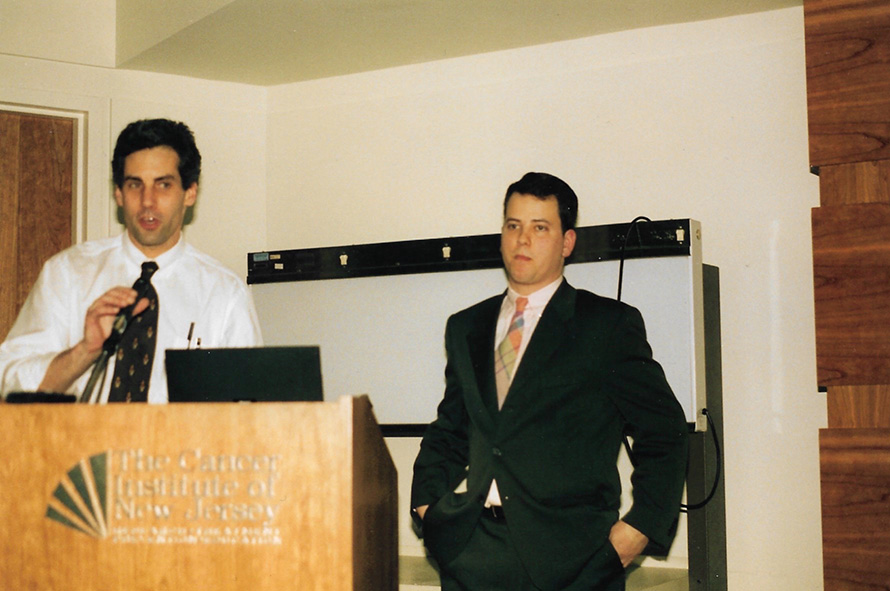
Dr. Rubin and Dr. Paul Haluska
From Academia to Merck: Scaling Impact
For Dr. Rubin, the transition from academia to industry was not a change in mission, but an expansion of scope. His focus remained developing better cancer treatments; industry offered the resources to pursue that goal at scale.
“It wasn’t that big of a change for me,” Rubin says. “Because I had worked with many different companies and I had a good sense of them.”
When Rubin joined Merck nearly 20 years ago, the company was still defining its oncology ambitions, and immunotherapy was widely viewed with skepticism, a skepticism he shared.
“My background at that time I was not an immuno-oncology person,” he says. “My laboratory focused on topoisomerases, so I was interested more in chemotherapy.”
What changed that view was not theory or preclinical promise, but what emerged in patients once pembrolizumab reached the clinic.
“When we took the drug to the clinic there were very dramatic responses early on even during the dose escalation part of the trial,” Rubin recalls.
Those early signals triggered an unprecedented development effort. A Phase I study initially designed for fewer than 100 patients expanded to roughly 1,200, ultimately leading to approvals in melanoma and lung cancer, the first companion diagnostic for an anti–PD-1 therapy, and the first U.S. approval of an anti–PD-1 agent.
For Rubin, the experience reinforced a principle shaped over decades in early-phase research.
“It’s really the clinic where the drug has to prove itself.”
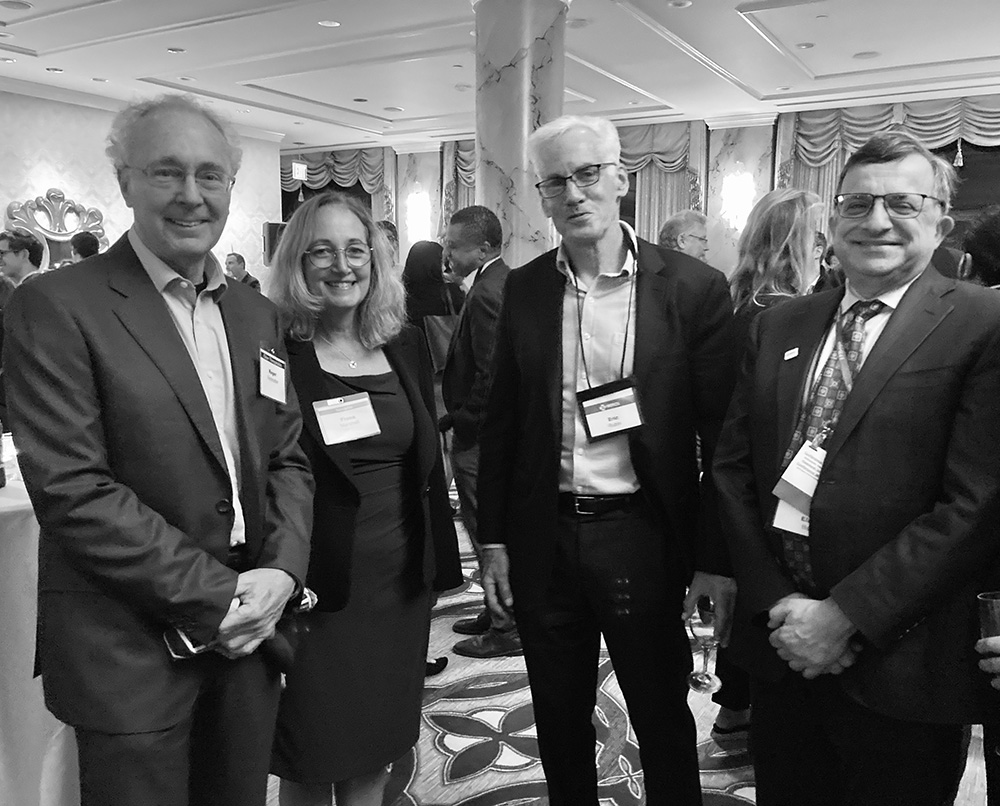
Merck reception at the J.P. Morgan Healthcare Conference. From left to right: Roger Perlmutter, Fiona Marshall, Eric Rubin, and Eliav Barr.
Keytruda: Lessons from Breakthroughs and from Failure
Pembrolizumab is often cited as a textbook success. Rubin is quick to caution against drawing comfort from exceptional outcomes. Across his career, he has seen far more oncology programs fail than succeed, not because the science was uninteresting, but because early decisions misread or ignored critical signals.
“It’s sort of easy when you have a Keytruda that you’re developing,” Rubin says. “Most drugs aren’t like that.”
Across Merck’s pipeline, ambiguity was far more common than clarity. Early development required decisions based on incomplete data, with real consequences.
“I think the challenges can be how to quickly assess whether the drug is active or not,” he says. “What everyone’s looking for, patients, regulators, industry, physicians, is clinical benefit and therapeutic window… and that’s unusual.”
For Rubin, one lesson stands above the rest—particularly for capital-constrained companies: early monotherapy activity matters.
“If you’re not seeing monotherapy activity, some evidence of tumor shrinkage by the drug by itself, you probably should stop development of that drug. This can be a hard, hard thing for companies to do because you’ve invested a lot of time and effort and money,” Rubin says. “But even for big pharma you’re better off making a no-go decision rather than proceeding into large, very expensive phase three trials and ultimately failing.”
Closely tied to this judgment is dose selection. Rubin views dose as a strategic decision, not a technical one, an insight later reinforced by regulatory initiatives such as Project Optimus.
Biomarker strategy is equally decisive. Thoughtful, data-driven biomarker selection can sharpen efficacy signals and accelerate development; the absence of such strategy often prolongs uncertainty and waste.
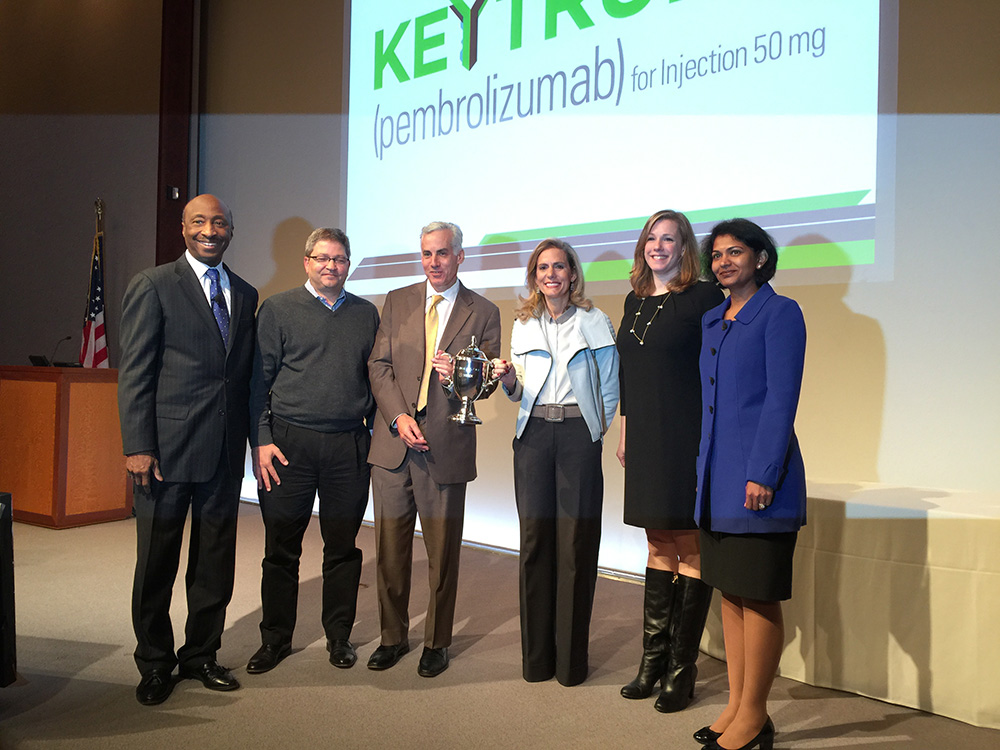
The Merck Chairman’s Cup, an annual award recognizing excellence in drug development, presented for the development of pembrolizumab (Keytruda).
Dose, Biomarkers, and the Cost of Getting It Wrong
Pembrolizumab presented an unusual challenge.
“It’s not a very toxic drug and so you know there was no maximum tolerated dose,” Rubin says. “There was quite a bit of debate on whether we should pursue a high dose or low dose.”
Merck made a then-uncommon choice to conduct randomized dose comparisons.
“We ended up picking the low dose which actually had similar efficacy in randomized comparisons with the higher dose.”
That decision anticipated future regulatory expectations.
“This became again sort of a harbinger for Project Optimus.”
Biomarker strategy proved just as consequential. Early lung cancer cohorts enrolled broadly, but analysis revealed a clear pattern.
“We found that most of the responses were in patients who expressed PD-L1.”
Despite debate, Merck narrowed its registrational strategy.
“We decided to only enroll patients with tumors having at least 50% expression of PD-L1.”
The result was the first approval in first-line lung cancer, an outcome driven by precision, not breadth.
How Small and Mid-Size Pharma Should Think About Risk
For Dr. Rubin, risk in oncology drug development begins well before the first patient is dosed. The earliest, and often most consequential, decision is whether a compound should enter the clinic at all.
“The first risk is of course taking a compound into the clinic,” Rubin says. “Even with sound preclinical data there’s always a risk there.”
That decision, he emphasizes, should never be made in isolation. Determining readiness for first-in-human studies requires input across disciplines, from biology to translational science.
“It’s a multiple, multiple, multiple discipline type discussion,” he says, “got basic scientists, biologists, and so forth.”
The Real Question: How Much to Invest Before Conviction
Once a program enters the clinic, Rubin believes the central strategic question becomes how much to invest before there is real confidence that a drug has approval potential. Modern Phase I trial design plays a critical role in managing that uncertainty.
“These days most phase one trials are designed to have an initial part which is dose escalation and multiple cancer types,” Rubin explains. “Then there’s a second part where, once you’ve figured out maybe a dose or doses that are likely to be effective, you study one or more cancer types.”
That structure creates its own set of risks.
“If you only pick only one cancer type and it doesn’t work, maybe you picked the wrong cancer type,” Rubin says. “The flip side is sometimes companies will pursue seven or eight expansion cohorts, and it ends up all being negative.”
Drawing on formal analyses conducted during his time at Merck, Rubin now applies a disciplined rule of thumb, one he routinely advises small and mid-size companies to adopt.
“For compounds where you’re not really sure yet of their ultimate potential,” he says, “three to five expansion cohorts were recommended. That’s what I usually recommend now when I’m consulting for companies.”
A Critical Stop-Go Decision: Monotherapy Activity
Rubin flags another inflection point that smaller companies, in particular, often underestimate: whether to proceed without clear single-agent activity. While combinations can appear attractive, especially in competitive indications, he views this as one of the highest-risk decisions in early development.
“If you don’t see monotherapy activity and still decide to move forward, typically by combining the drug with standard-of-care therapies, you’re taking on real risk. Down the line, when you run Phase III trials, those studies may end up negative.” He is careful to acknowledge nuance, “that’s not universally true; there are examples of drugs with minimal monotherapy activity that have ultimately been approved in combination. But overall, it’s a significant risk to take on if you don’t have any evidence of monotherapy activity.”
Key Takeaways:
- Risk starts before the clinic: Entering human trials is itself a major inflection point and must be a multidisciplinary decision.
- Phase I design is strategic: Dose escalation plus expansion cohorts shape how quickly, and accurately, activity can be assessed.
- Expansion cohorts require balance: Too few risks missing a signal; too many risks burning capital without clarity.
- Three to five cohorts is often optimal when true potential is still uncertain.
- Monotherapy activity matters: Proceeding without it, especially into combinations, significantly increases late-stage failure risk.
Combination Strategies and Early Warning Signs
When assessing whether a program merits continued investment—even when the underlying biology is compelling, Rubin points first to toxicity as an early and often decisive signal.
“If you’re seeing a lot of side effects, particularly at doses where there’s no evidence of tumor shrinkage, that’s a real warning sign.”
Asked where companies tend to overbuild or underinvest in early clinical development, Rubin emphasizes that genuine overbuilding is uncommon among small biotechs, largely because capital constraints impose discipline from the outset. When excessive build-out does occur, he says, it is more often a feature of large pharmaceutical organizations.
“Big pharma sometimes will do this,” Rubin notes, describing early trials burdened with expansive exploratory objectives. With the proliferation of advanced tools, such as circulating tumor DNA analyses and complex blood- or tissue-based assays, he says it has become easy to ask more questions than the data can reasonably support at that stage.
While such approaches can be scientifically attractive, Rubin cautions that their value is limited in the absence of demonstrated efficacy or dose clarity, and may distract from more fundamental development decisions.
By contrast, he says, underinvestment is far more common among small companies—particularly in pharmacology and dose optimization, where gaps can carry lasting consequences.
“Underinvesting in the pharmacological aspects, or underestimating the need for randomized dose comparisons, you can mess things up if you don’t get the dose right,” Rubin says.
He adds that critical capabilities such as exposure–response modeling, safety modeling, and pharmacometrics, often accessed externally rather than built in-house, must be anticipated early and incorporated deliberately into development plans. Failure to do so, he suggests, can undermine even well-founded programs as they advance.
Key Takeaways
- Advanced biomarkers and exploratory assays can be premature without efficacy or dose clarity.
- Underinvestment in pharmacology and dose optimization is a common early risk.
- Randomized dose comparisons are essential to avoiding costly downstream errors.
- Exposure–response modeling, safety modeling, and pharmacometrics are critical capabilities, even when externally sourced.
Cutting Costs Without Undermining the Program
When budgets tighten, Rubin advises reducing scope rather than scientific rigor.
“If resources become really limiting you can reduce [expansion cohorts],” he says.
Combination studies, he believes, should usually wait.
“If resources become scarce you’ve really got to focus on the monotherapy development before you get to combinations.
Facing Regulators With Experience, Not Fear
For small and mid-size biotech companies, interactions with regulators often feel daunting. Rubin argues that the challenge is less about excessive caution than about limited experience. Regulatory meetings, in his view, are not exercises in persuasion, but tests of preparation, judgment, and familiarity with the process.
“You want to make sure you’ve got experts working with you who have experience with this,” he says. “If you haven’t had that experience, it’s very difficult not to do things that can be problematic.”
That experience, Rubin notes, extends well beyond the science itself. It encompasses how questions are framed, how briefing materials are structured, and how data are presented in ways regulators can readily interpret.
“You want to make sure that you’re approaching FDA in a way that’s transparent so that they will see the data.”
Equally important, he adds, is knowing what not to do. Overstating a program’s promise, particularly in early stages, can erode credibility rather than strengthen it.
“You certainly don’t want to oversell anything,” Rubin says. “That’s not reflected well by FDA.”
Rubin’s perspective has been shaped by decades of close engagement with regulators, including extensive work with Dr. Richard Pazdur and the Oncology Center of Excellence during his time at Merck. He describes that period as formative for modern oncology regulation, in part because of the agency’s deep clinical grounding.
“One of the nice things he did was to make sure the group at FDA were all oncologists,” Rubin says. “They had a really deep understanding of patient need and patient perspectives, and that helped make development more efficient and meaningful.”
As FDA leadership continues to evolve, Rubin believes the lesson for smaller companies remains unchanged: regulatory success depends on having people who know the terrain.
“It’s really about having people who’ve done this before,” he says. “From writing the briefing documents to knowing how to engage, so you’re not asking too many questions, but you’re answering the right ones at the right time.”
Key Takeaways
- Regulatory meetings reward preparation, not persuasion
- Experience shapes judgment more than confidence
- Transparency builds trust; overselling undermines it
- Effective engagement depends on asking, and answering, the right questions
- Strong briefing documents are as critical as strong data
Watching the Next Wave: Cancer Vaccines and What Comes After
After decades spent shaping modern immuno-oncology, Dr. Rubin is cautious about predictions. But when asked which areas of cancer drug development may be closest to a near-term inflection point, one long-struggling approach stands out.
“One of the ones that I’m still waiting to hear about are the cancer vaccines,” Rubin says.
Cancer vaccines have a difficult history. Repeated failures over decades led many in the field to question whether the approach could ever deliver meaningful benefit. Rubin believes those disappointments were as much about timing as biology.
“Like the early days of immunotherapy, cancer vaccines for a time had a long history of failure,” he says. “Many people felt that this was because they couldn’t be combined with anti–PD-1.”
During his time at Merck, Rubin was closely involved in one of the most ambitious attempts to revisit the field: a collaboration with Moderna to develop a personalized cancer vaccine. Unlike earlier strategies, the approach is built around each patient’s individual tumor mutations, a design aligned with how precision oncology has evolved.
“That program is now in phase III,” Rubin says. “I think it’s scientifically very attractive because it’s based on each patient’s individual tumor mutations.”
If successful, he believes such vaccines could have broad relevance across tumor types. While manufacturing complexity remains a challenge, Rubin views it as a solvable one.
“Although the manufacturing right now is costly, I think that cost is likely to come down,” he says. “So I’m hopeful that those trials will be positive.”
Key readouts may arrive soon, including a melanoma study that could clarify whether decades of work in cancer vaccines are finally converging on success.
Rubin also points to continued momentum in antibody–drug conjugates and emerging protein degraders, particularly for historically difficult targets such as RAS. Still, his optimism remains grounded in reality.
Even after a career spent advancing new therapies, Rubin is acutely aware of how much work remains, a perspective shaped not only by science, but by personal experience.
“The science continues to develop,” he says. “There’s still work to do and I’m glad there are people that are interested in doing it.”
Why Rubin Chose Arc Nouvel
Dr. Rubin’s relationship with Arc Nouvel founder Dr. Nageatte Ibrahim spans decades, beginning in academia and continuing through Merck, where Rubin recruited her and later worked alongside her in oncology leadership. What ultimately drew him to Arc Nouvel was its integrated, multidisciplinary model.
“What she’s done is quite innovative in the consulting space,” Rubin says. “It brings together the kind of development expertise that many small and mid-size companies simply can’t afford to build in-house.”
For Rubin, Arc Nouvel fills a critical gap, providing early-stage biotech and pharma teams access to experienced clinical, regulatory, and development judgment at moments when decisions matter most.