

Arc Nouvel is a boutique consulting firm that supports pharmaceutical, biotechnology, and investment clients with end-to-end clinical development solutions, strategic consulting, operational support, and executive coaching across early- to late-phase programs. But the firm’s real advantage lies in the experience behind its guidance, leaders who have made the decisions that shape world-known drug programs long before those programs reach the headlines.
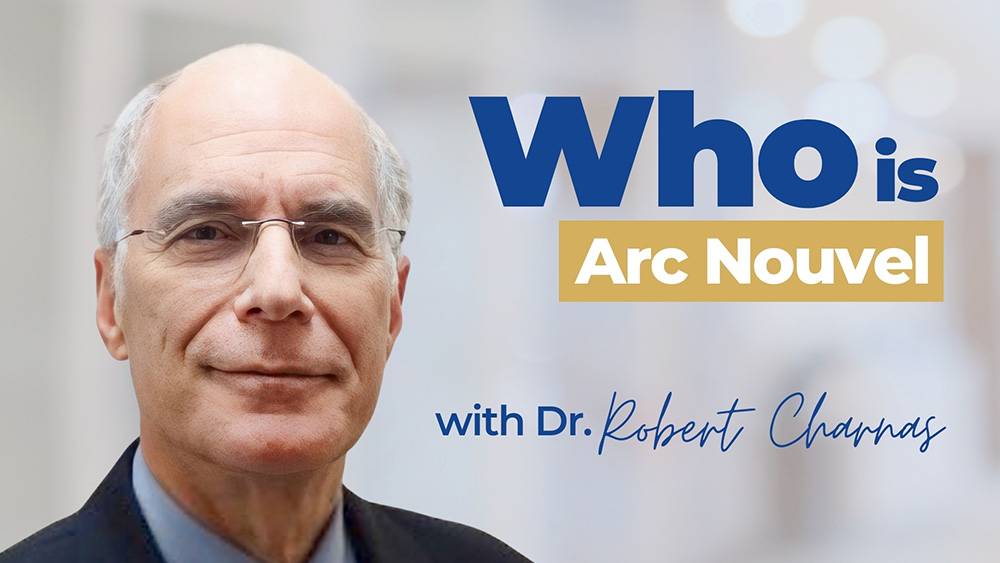
One of these leaders is Dr. Robert Charnas, a regulatory and development strategist whose career spans global biopharma, infectious disease, and major oncology approvals. Trained as a scientist and shaped by decades of leadership across Roche, Amgen, Janssen, Regeneron, Agios, and Servier, Charnas has spent his life translating complex science into practical development paths, and aligning those paths with what regulators ultimately care about: public health and patient benefit.
Now a consultant at Arc Nouvel, he advises pharma and biotech companies on the regulatory matters affecting decisions that determine whether a program stalls, pivots, accelerates, or reaches patients. In this article, he reflects on the career moments that pulled him from the bench into regulatory leadership, what separates approvals from “great science” that never reaches the clinic, and why the most effective development strategies begin by starting with the patient and then working backwards (start with the “end in mind”).
From Chemistry to Patients
Dr. Robert Charnas is a scientist, and started at the bench, drawn by the intellectual challenge of chemistry and the multiple questions it could help answer.
He earned his PhD in chemistry at Harvard, where his work increasingly shifted toward biochemistry and kinetics. After postdoctoral research, he joined Roche in Switzerland, working in a biochemistry lab focused on antibiotic resistance, an area that reflected his early interest in infectious diseases.
His work spanned projects from antibiotic resistance to malaria biology. It was demanding, careful science. But over time, the distance between the lab and real-world patient impact became harder to ignore.
“I was at a point, where talking to your test tubes, I think, is OK if you’re a scientist. When you hear the test tubes start talking back to you, then maybe it’s time to go and do something else.”
“I wanted a more human contact. I wanted something that was more immediate.”
That desire led him into medical affairs, where he worked on Roche’s leading antibiotic product. The shift brought him closer to hospitals, physicians, and patients, and into his first direct regulatory interactions.
The Sweden Approval after Five Failed Attempts
Dr. Charnas’ first major regulatory success came under difficult circumstances.
“My first success was getting a product approved in Sweden after the company had failed five times previously.”
The turnaround did not come from a procedural maneuver. It came from reframing the entire conversation.
“I followed the science. I listened to what the regulators were saying and their concerns… But more importantly, I refocused the discussion on the patients, because they were interested not only in the science, but what benefits this product could bring for the patients.”
The product was approved with a narrow indication. But it created a foothold.
“We got the door open, and then with opened door were able to broaden the indication.”
That experience shaped a principle he still applies decades later.
“Understand what the long-term goal is, take a look at what the short-term goal is, and you’ve got to get that door open.” When the door is closed, you have to open it. Understand the long-term goal and evaluate shorter term options to reach the long-term objectives
For early-stage companies, development is rarely a single decisive event. It is a sequence of smaller, carefully chosen openings.
“If the door is slammed in your face, maybe you have to try again. But ideally… as long as there’s a little opening, that’s where you have to go.”
The Chronology of Success
After that early success, Dr. Charnas moved fully into regulatory affairs at Roche, still based in Switzerland. He worked on programs in hepatitis C and HIV, diseases that, at the time, had far fewer effective treatment options than they do today.
“I know in 2026 it sounds completely bizarre to talk about treating viral hepatitis with an interferon, but that’s how far we’ve come.”
From Roche, he moved to Amgen, where he worked on programs that would become Prolia® and Xgeva® (denosumab), as well as growth-factor therapies.
He later joined a smaller biotech company, an experience that would prove formative. The company was eventually acquired by Janssen, and its lead program became a multibillion-dollar product (Zytiga). He served as global regulatory lead and later as compound development team leader.
“I knew the product, I knew the development, I was very involved in all of that. And I wanted the experience of being a product lead.”
During that time, he also worked on early immunotherapy programs using live Listeria-based vaccines, an approach that combined novel biology with complex manufacturing challenges.
“I learned a lot… not only about the particular diseases and the immunology, but also what you need to do with these novel modalities on the CMC side.”
Those programs eventually ended, largely because of manufacturing complexity, a reminder that even compelling science can falter when execution becomes impractical.
Later leadership roles at Regeneron, Agios, and Servier placed him at the center of oncology development and regulatory strategy. His work contributed to major approvals, including the IDH-targeted therapies TIBSOVO and VORANIGO.
Today, he advises companies ranging from startups to larger organizations, focusing on strategic decisions where experience can prevent costly missteps.
It’s Actually Why I Get Up in the Morning
Across infectious disease, oncology, and multiple development environments, Dr. Charnas sees a single consistent theme in his work.
“I think of myself as a drug developer… you can get lost and it may not help people doing cool science. But the data, particularly patient data, is really critical.”
He recalls time spent in hospitals working with pharmacists to slow the spread of antibiotic resistance, even when it meant limiting use of his own company’s drugs.
“You’ve got to take certain measures because otherwise the resistance will spread and the patients are going to die.”
In some cases, an entire class of antibiotics was restricted. But because of their approach their product ended up on top.
“I know it sounds peculiar that somebody from a pharmaceutical company would go into a hospital and say- Do not prescribe our drugs too broadly. Don’t use our antibiotics this way. This is how you use our antibiotics. But I find that ethical.”
That focus on patient benefit became the through-line of his career.
“It’s actually why I get up in the morning. If I can’t do something that’s really going to have a benefit for a patient eventually, then maybe it’s not something that’s in line with what I wanna do.”
Regulatory Strategy: Working Backward from the Patient
Dr. Charnas’ view of regulatory strategy is notably different from the administrative caricature many scientists imagine. He sees it as the discipline that forces a program to define its purpose early, and align every step toward that goal.
“At the heart of the regulatory strategy is what do you want to do with your product? What’s your target product profile and what is your target product label? In essence, how are you going to help a patient with this product?”
Once that objective is clear, strategy becomes backward planning.
“The regulatory strategy works backwards: from where I know I want to go to where I know I’m starting.”
That logic shapes every stage of development: nonclinical safety, pharmacology, first-in-human trials, and manufacturing readiness.
“All of those elements have to be considered as part of the overall regulatory strategy. It’s incredibly broad. It’s incredibly diverse.”
For smaller companies, he believes this integrated thinking is especially important. Without it, development becomes a series of disconnected experiments rather than a coherent path to approval.
Global Strategy: The Advantage of Planning Early
Global regulatory expectations have become more aligned over the past three decades, but strategic planning remains essential.
“The world has changed a lot… the FDA was typically one of the leaders… and their approach has been adopted in different ways … by many, such as… European Union, the UK, Health Canada, Japan, China.”
Still, companies that design programs solely for the U.S. market may face costly surprises later during geographic expansion.
“One company actually had to reproduce the development plan in both China and Japan… that’s the thing to really avoid.”
The fix is early, integrated planning.
“Think globally, do as much as you can with a single study.”
Sometimes the difference is operationally small but strategically enormous.
“A small number of patients in Japan early in the development plan can avoid having to do a completely separate study and may bring the product to market three or four years earlier.”
When Success Happens, and When It Doesn’t
Dr. Charnas’ involvement in IDH-targeted therapies offers a window into what successful programs look like.
“There were a number of competitors… it was a race to see who could get there first.”
The winning programs combined clear strategy, disciplined execution, and molecules that were inherently safe.
“ I came in after the first approvals. Those were really-well thought out development programs… They executed rapidly… And the molecules are very safe.”
But even strong science does not guarantee success.
“There are other cases of really great science where you get into the clinic and it doesn’t work… sometimes the biology wasn’t understood well enough when the development started.”
Which leads to one of his most pragmatic observations:
“It’s not just the science. It’s actually a little bit of luck.”
A Hard Discipline: Knowing When to Stop
In oncology, success stories dominate attention. Failures are typically quieter, particularly early one, but far more numerous.
“Few drugs are approved and many… fail. We hear and talk about success stories mostly.”
For Dr. Charnas, early development should be designed to force decisions.
“You have to be really strict… what’s the right experiment? We need to get to a point where we make a decision.”
Because the economics change dramatically in later phases.
“If we go into phase two… phase three, the costs will explode and we have to make sure that we bring the right molecule forward.”
Accelerated Approval Must be Followed by Confirmatory Evidence
Accelerated approval has become central to oncology, but Dr. Charnas stresses that it is not the finish line.
“The Regulatory pathway started with HIV… given the criteria of accelerated approval.”
In oncology, documented tumor shrinkage is a frequently used endpoint for the pathway.
“Particularly in oncology, getting a tumor to shrink, as tumors don’t shrink on their own.”
But accelerated approval must be followed by confirmatory evidence.
“The accelerated approval is just a step on the way to a regular approval. You have to confirm it… FDA now is much stricter.”
More broadly, development decisions must be made long before certainty arrives.
“Organizations are different. Some… have a lot of data, some… have less money… some… have shorter timelines. What the CEO wants is a rigorous assessment… so that an informed decision can be made, given all the uncertainty.”
Failure is Not a Mistake
Dr. Charnas is careful not to frame failure as error.
“Failure is not a mistake. Failure can be part of the risk calculus.”
Instead, he describes the ingredients of success.
“Thoughtful planning, detailed knowledge of the therapeutic area, and… rapid and flawless execution.”
Execution matters as much as strategy.
“You can have the best strategy in the world, but if you don’t execute on it, you won’t get there.”
Where to Invest, and Where to Outsource
For smaller companies, he is unequivocal about regulatory priorities.
“The best investment… is having a sound regulatory strategy early on.”
Operational infrastructure, by contrast, can often be outsourced.
“You must have oversight, but you don’t have to buy all of the electronic databases and all the rest of that. You can outsource… and then invest later, when you get to a point where it makes sense. I would recommend people look at having that overall strategy, and for the clinical and the regulatory CMC side.”
Fixing a strategy later is possible, but can be expensive and take a lot of time.
“Althought self-evident, it is worth repeating: get it right the first time.There are benefits to have that clear plan and making sure it fits with the regulatory (and company) objectives, and then ensure the the work is done properly.”
Working With Regulators: A Different Mindset
Many teams approach regulators with anxiety, but Dr. Charnas advises teams to approach regulators not as adversaries, but as professionals motivated by public health.
“Regulators… they don’t get paid that much money, but they do it for the cause. And what is the cause? It’s public health.”
In his experience, agencies like the FDA genuinely want new therapies to reach patients. The most productive meetings happen when companies frame their proposals around science and patient benefit, not timelines or financial pressure. A productiveapproach is to present the novel therapy and it’s benefits for the patient, the supporting data, and a clear development proposal.
When companies bring strong data and thoughtful proposals, the interactions can become genuinely collaborative. Former work colleagues (who had previously worked at the FDA), he notes, would sometimes look forward to meetings where the science was so compelling that regulators themselves learned something new.
“If a company can bring something novel… with sound scientific justification, that’s a really good place to start.”
And hearing “no” is part of the process.
“Getting a no answer… is not a failure… if you never get a no, maybe you didn’t push hard enough.”
Why Arc Nouvel
Dr. Charnas’ decision to work with Arc Nouvel reflects themes that run throughout his career: patient focus, speed, and experienced teams.
“What attracted me… was… this patient-centric approach, a desire to move rapidly, and… incredibly qualified individuals.”
For smaller companies, the advantage is strategic clarity under constraints.
“Qualified people with lots of experience… can look at a situation and come up rapidly with possible strategies… get the priorities right.”
What Smaller Biotech Companies Gain from Experienced Teams
When asked what small and mid-sized pharma companies benefit most from Arc Nouvel’s consulting support, Dr. Charnas highlights two factors:
1) Rapid, Experienced Strategic Thinking
An experienced team can quickly:
- Assess the situation
- Set priorities
- Propose realistic strategies
This is especially critical when companies face constraints such as limited funding, aggressive timelines, and uncertain data.
2) Chemistry and Trust
Technical expertise alone is not enough.
“The chemistry has to be right… a transparent and good back-and-forth is absolutely essential.”
Because development decisions are complex and often contentious, successful partnerships require:
- Trust between the company and consultants
- Mature, thoughtful personalities
- Open discussion of disagreements
“If it were so easy, anybody could do it.”