

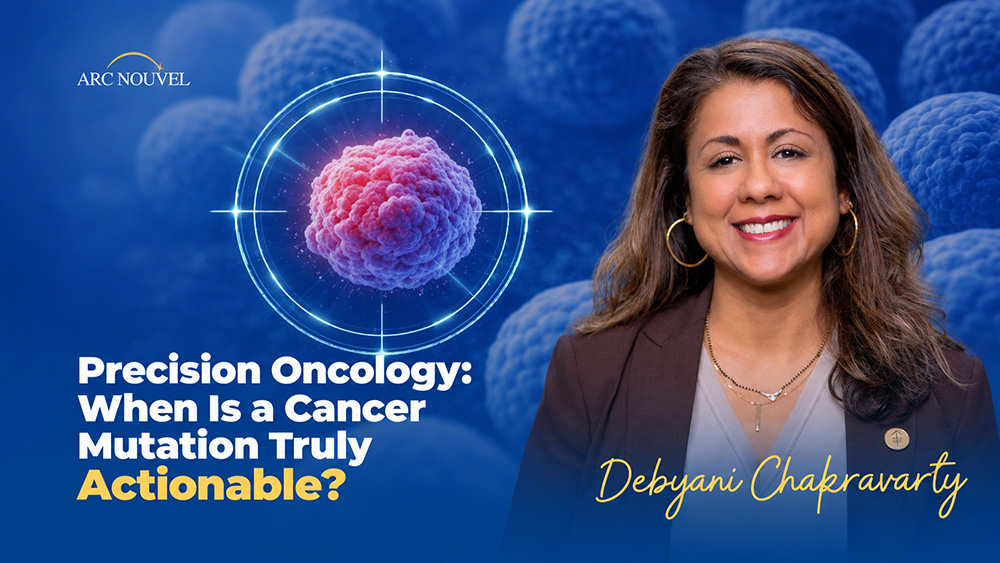

Dr. Debyani Chakravarty on evidence standards, genomic uncertainty and the clinical limits of mutation–drug matching
A mutation listed beside a therapy on a sequencing report may carry implications ranging from representing a regulatory-level biomarker to a preliminary biological hypothesis.
An approved biomarker–drug relationship, a finding supported by a small clinical study and an association observed only in a laboratory model may all appear relevant. Yet, their implications for patient care are fundamentally different.
Precision oncology depends on the interpretation that follows biomarker testing. Clinical value emerges after molecular findings have been assessed for evidentiary strength, disease context and relevance to the individual patient.
For Dr. Debyani Chakravarty, Lead Scientist of OncoKB and Associate Attending Molecular Geneticist at Memorial Sloan Kettering Cancer Center, the central challenge is setting the threshold at which a genomic finding becomes clinically meaningful.
OncoKB, MSK’s precision-oncology knowledge base, organizes the biological and therapeutic implications of cancer-associated genomic alterations. To do this, OncoKB scientists carefully curate molecular data from FDA drug labels, professional guidelines and the scientific literature and make decisions about which findings are prioritized based on associated clinical significance, how uncertainty should be represented and where an association should remain investigational.
“The intellectual aspect of the science, its practical application in clinical decision support and connecting it to helping patients, is what led me to this work,” Dr. Chakravarty says.
Her perspective reveals the distance between detecting a mutation and making a defensible treatment decision.
Actionability Requires an Explicit Evidence Standard
The term “actionable alteration” is widely used across oncology, yet its meaning varies considerably.
It may describe a biomarker linked to an approved therapy in the same cancer type. It may also refer to a finding that supports clinical-trial eligibility, suggests an off-label treatment or has shown activity only in preclinical studies.
Without an explicit evidence level, the term offers little guidance about how strongly a result should influence care.
“Actionable can mean many things,” Dr. Chakravarty says. “The term has been used in ways that are not always as responsible as they should be.”
OncoKB addresses this ambiguity through a structured hierarchy of therapeutic evidence. Biomarkers associated with regulatory approvals or established professional guidance occupy the highest categories. Other levels capture findings supported by clinicalevidence, investigational data or compelling biological rationale. Resistance biomarkers are classified separately because their treatment implications differ from markers of sensitivity.
A molecular finding may be scientifically plausible yet insufficiently validated to justify changing treatment. It may have relevance in another cancer type but be of uncertain value in the disease being treated. It may identify a clinical trial while offering no support for routine use.
“The levels-of-evidence system is intended as a framework of reference that classifies for clinicians those alterations that are not well established biomarkers but may fall within guideline or evidentiary space of being actionable ,” Dr. Chakravarty says.
Weak associations can acquire the appearance of treatment recommendations when evidence levels are unclear. A patient may then be directed toward an experimental option despite having access to better-supported care.
“The last thing you want is for a patient to enroll in a clinical trial based on a very unsubstantiated link when there are better standard-care options available,” Dr. Chakravarty says.
Evidence classification limits the clinical risks created by overstated or poorly contextualized genomic findings.
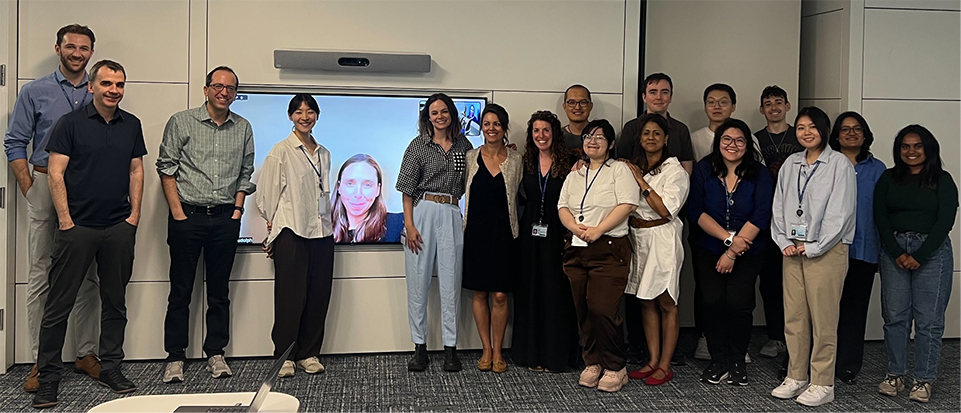
OncoKB Team
Clinical Context Changes the Meaning of a Biomarker
A well-supported biomarker–drug association still leaves major clinical questions unanswered.
A knowledge base can establish that a genomic alteration is associated with sensitivity or resistance in a defined cancer context. The treatment decision also depends on disease stage, treatment history, performance status, co-occurring alterations, available standard therapies and the patient’s goals.
“I would hesitate to say that an alteration is actionable without the full context of the patient,” Dr. Chakravarty says.
The same alteration may lead to different decisions in different clinical settings. A patient who has exhausted established treatments may reasonably consider an off-label therapy supported by limited but coherent evidence. A newly diagnosed patient with the same alteration may have access to a standard treatment with stronger evidence and a better-characterized benefit–risk profile.
Interpretation also depends on the reliability of the laboratory finding. Molecular pathologists must determine whether the alteration is technically valid, whether it is somatic or potentially germline and whether the assay characterized it accurately.
Laboratories may use different sequencing platforms, transcripts, annotation rules, variant-calling thresholds or diseaseclassifications. Knowledge bases may also review evidence at different times or apply different criteria.
For clinicians outside specialist centers, this variability creates a practical challenge. A report may contain detailed molecular information while leaving the strength and limitations of the interpretation unclear.
Dr. Chakravarty points to professional societies, academic consortia and molecular tumor boards as important sources of support.
“There are academic resources that clinicians can leverage, so they can be more confident with their interpretation of molecular data than if they were interpreting a result in isolation. ” Dr. Chakravarty says.
The value of genomic testing depends heavily on the expertise and infrastructure available after the result is generated.
AI and the Governance of Clinical Evidence
Precision oncology produces more information than any individual team can review manually. New trials, regulatory decisions,case reports, biomarker studies and preclinical findings appear continuously. Curators must identify relevant evidence, assess its quality, connect it to the correct alteration and cancer type, and revise classifications as the field evolves.
Artificial intelligence can improve the speed and completeness of this work.
“While AI can help us curate faster by synthesizing a scientific narrative from various literature sources nothing beats evidence-based judgment calls,” Dr. Chakravarty says.
Its practical uses include literature screening, data extraction and synthesis, documentation support and identification of evidence that warrants expert review.
However, a model may accurately extract a study’s conclusion while missing weaknesses in the study design, differences between the study population and the patient under consideration, or conflicting evidence elsewhere in the literature.
Retrieving evidence and judging its clinical significance require different forms of expertise. A meaningful assessment mayinvolve response durability, sample size, comparator data, cancer lineage, assay validity, regulatory status and the relationship between the alteration reported and the alteration studied.
“The information has to be curated with sufficient oversight and governance, with both clinical insight and scientific accuracy,” Dr. Chakravarty says.
Clinical AI systems need traceable sources, current evidence, transparent weighting and accountability to a defined standard. A key limitation of AI is the deceptive certainty with which models generate or infer output that are not supported by the evidence.
Dr. Chakravarty also sees an important role for AI in extending access to validated knowledge, particularly where molecular-pathology expertise is limited.
“The beauty of AI is that it provides accessibility to databases via natural language-based questioning. So an oncologist can simply ask, for example “Can my 73 yo patient with stage IV lung adeno and EGFR E709K be treated with osimertinib”. The key is linking the answers not to the model’s hypothesizing but to information that is already governed and curated,” Dr. Chakravarty says.
A system that helps a community oncologist navigate reliable, evidence-graded resources could narrow the gap between specialist centers and lower-resource settings.
The Precision-Oncology Gap Begins With Access to Testing
Precision oncology is often evaluated by the proportion of patients whose cancers contain a potentially targetable alteration.
That measure leaves the delivery pathway largely unexamined. A patient must reach a setting where genomic testing is offered.The result must arrive early enough to influence treatment. A clinician must be able to interpret it. The associated therapy or clinical trial must then be accessible.
Dr. Chakravarty has examined barriers to precision oncology access across the United States, Canada and Mexico. Thesecountries differ substantially in healthcare systems, financing, geography and infrastructure, yet disadvantaged patients often encounter similar practical failures.
“The axes along which disparities exist differ, but the barriers themselves are the same,” Dr. Chakravarty says.
In Canada, geography may separate patients in northern or Indigenous communities from large academic centers. In the UnitedStates, insurance coverage, socioeconomic position, rurality and care delivery setting can shape access. In Mexico, the division between public and private systems may determine whether testing and matched treatment are realistic options.
The first failure is often access to sequencing. Testing may not be reimbursed, referral may occur late or the patient may never reach a center with the resources to order it.
The second failure occurs after the result. A relevant therapy may be unaffordable, unavailable through the public system, unregistered in the patient’s country or accessible only through a distant clinical trial.
“The first challenge is getting genomic testing,” Dr. Chakravarty says. “The second is being able to afford or access the matched therapy.”
These barriers change the practical meaning of actionability. A biomarker may have strong clinical evidence and still provide no benefit to a patient who cannot obtain the associated treatment.
Measures of precision oncology performance should therefore include timely testing, expert interpretation and receipt of matched therapy, alongside the number of targets identified.
The gap is especially visible between major cancer centers and community or rural settings. Closing it requires stronger referralpathways, reimbursement, workforce expertise, drug availability and trial access.
Interpreting Rare Alterations Without Conventional Trial Evidence
Many molecular subsets are too rare for conventional randomized trials.
The development of therapies targeting NTRK translocations demonstrated that a rare genomic event can define a clinically important population across several tumor types. The biology was persuasive, and responses to TRK inhibition were substantial and consistent enough to support a tissue-agnostic treatment strategy.
“NTRK translocations are rarely detected in common cancers like lung cancer and commonly found in rare cancers like mammary secretory cancers,” Dr. Chakravarty says.
The success of TRK-targeted therapy established a powerful precedent, but rare alterations vary greatly in biological and clinical significance.
Some occur in established cancer genes but are alterations for which function remains uncertain. Others involve unfamiliarprotein domains or rely on evidence from related alterations rather than the exact event identified in the patient.
When randomized evidence is unavailable, evaluation must integrate the known biological function of the alteration, its effect ona critical protein domain, evidence from related variants, laboratory activity, clinical responses in the same or other tumor types, and the patient’s treatment history and available alternatives.
“Evaluating cancer-specific treatment options associated with rare alterations depends on assessing all the available datacollected for the alteration and often doing so independently of the cancer type in which it is detected,” Dr. Chakravarty says.
An off-label therapy supported by a coherent biological rationale and limited clinical evidence may be reasonable afterestablished options have been exhausted. The same evidence may be insufficient to replace an effective standard treatment earlier in the disease course.
“The alteration and the cancer type cannot be looked at in isolation,” Dr. Chakravarty says. “These have to be considered within the context of the individual patient’s clinical history.”
A responsible interpretation should specify which elements are established, inferred or speculative.
Where Tumor-Agnostic Treatment Meets Lineage Biology
Tumor-agnostic approvals have changed how oncology defines disease by recognizing that a molecular dependency may carry therapeutic importance across several tissues of origin.
“Tumor-agnostic approvals were a paradigm shift because they recognized the cancer’s molecular profile may be tantamount to its specific histology when considering treatment,” Dr. Chakravarty says.
The response to a targeted therapy still depends on the biological environment in which the alteration occurs. Tissue lineage, co-occurring mutations, pathway feedback, gene expression and the immune microenvironment can all influence treatment effect.
BRAF V600E illustrates this complexity. The alteration is now considered a tumor-agnostic biomarker and is clinically targetablein several malignancies, but the effectiveness of pathway inhibition and the required treatment strategy may vary by certain disease types such as EGFR-driven colorectal cancer.
Tumor mutational burden presents a different challenge. A single numerical threshold can suggest broad applicability even though its predictive value may vary by assay, tumor type and underlying immune biology.
“There are lineage dependencies that have to be considered,” Dr. Chakravarty says.
Because tumor-agnostic indications expand the eligible treatment population, their evidentiary basis warrants careful scrutiny across individual tumor types.
“Can any cancer treatment strategy be truly tumor agnostic? I don’t think so,” Dr. Chakravarty says. “Can any case be patient-history agnostic? Of course not.”
Treatment interpretation depends on the interaction among histology, molecular alteration and patient clinical presentation.

The Standards Precision Oncology Still Needs
Precision oncology faces persistent deficits in evidence standardization, interpretive capacity and equitable delivery.
Dr. Chakravarty’s work highlights three questions that should accompany every claim of molecular actionability:
- How strong is the evidence?
- Does it apply to this disease and this patient?
- Can the patient realistically receive the intervention?
These questions offer a more meaningful measure of precision oncology performance than the number of molecular targets identified.
“The number of mutations, cancer types and patient-constellations is virtually infinite,” Dr. Chakravarty says.
A well-governed knowledge base separates robust evidence from early hypotheses, clarifies the limits of available data and gives clinicians a more reliable foundation for judgment.
“The end goal for any knowledge base is to anchor treatment options to the individual patient rather than to the histology or the mutation,” Dr. Chakravarty says.
Achieving that goal requires credible evidence standards, multidisciplinary interpretation and access pathways capable of carrying molecular insight into clinical care.