

A tumor can be sequenced in extraordinary detail and still leave the patient with no meaningful option.
That is the uncomfortable truth sitting beneath the progress of precision oncology. The field has become remarkably good at finding molecular alterations. It has become better at matching some of them to therapies. But between a genomic finding and a patient benefit lies a fragile chain: interpretation, evidence, access, trial availability, reimbursement, and clinical judgment.
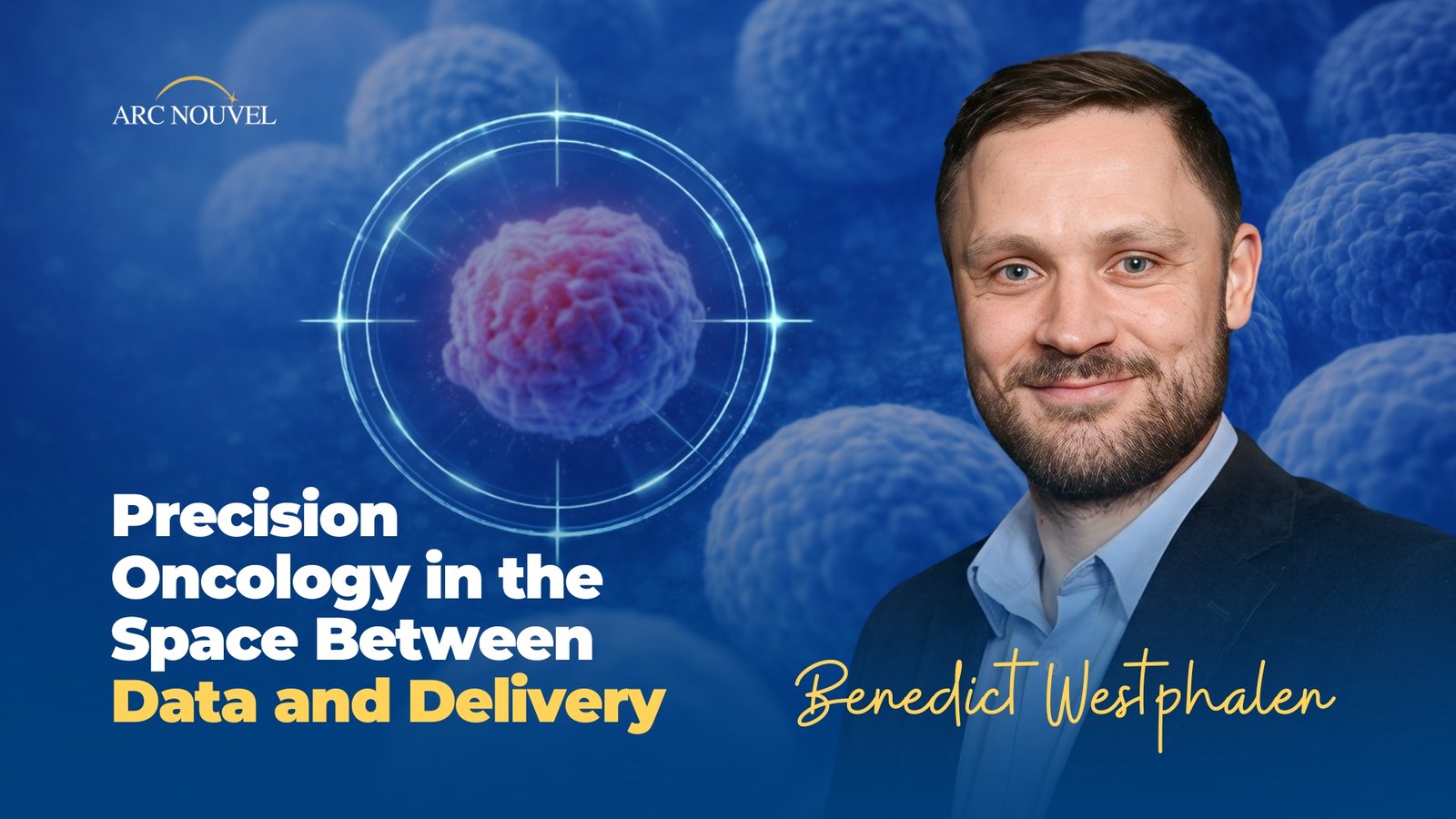
Dr. Benedikt Westphalen works inside that chain.
A medical oncologist and molecular biologist by training, he is Director of the Center for Personalized Medicine at the University of Munich and Chair of ESMO’s Precision Oncology and Taxonomy Committee. His work is not limited byidentifying what is targetable. It is also about asking what is truly useful, what is scalable, and what can be delivered responsibly to patients.
The Path to Molecular Tumor Boards
Dr. Westphalen’s path into precision oncology was not fully planned. Like many careers in medicine and science, it became clear only in retrospect. He trained in oncology and molecular biology, with a strong background in gastrointestinal cancers, and pursued postdoctoral work that sharpened his ability to think across disciplines.
That scientific foundation later became unexpectedly central to his clinical role. In 2017, he was asked to take over the molecular tumor board at the University of Munich, just as comprehensive genomic profiling was beginning to gain momentum. The timing was decisive. Precision oncology was moving from a specialist interest into a rapidly expanding field, and molecular tumor boards were becoming a key structure for interpreting complex genomic information.
“I actually didn’t plan to go there, but then it happened, and I’ve been with it ever since.”
That unplanned entry into the field shaped his understanding of career development. Precision oncology often rewards those who can connect clinical judgment with scientific interpretation. For Dr. Westphalen, his earlier laboratory training became valuable in ways he could not have predicted. It allowed him to speak both the language of medicine and the language of biology, a combination that remains essential in molecular oncology.
“I wouldn’t have imagined how my postdoc experience then would become useful later on. But all of the training and also the non-professional experiences shaped me greatly for what then lay ahead.”
Precision Medicine Is More Than Genomics
One of Dr. Westphalen’s central messages is that precision oncology should not be confused with the whole of personalized medicine. In his view, personalized healthcare is broader. It includes not only molecular data, but also sex, gender, comorbidities, social context, clinical condition, and the lived realities that shape each patient’s care.
This distinction matters. The field has sometimes been tempted to reduce precision medicine to sequencing. But a genomic report is not a patient. Molecular information can be powerful, but only when integrated into a wider clinical picture.
“I believe in oncology or in medicine, we should pursue personalized healthcare. That means we integrate patient data, and that data can be sex, this data can be gender, this can be social network, this can be comorbidities, but this can also be molecular data from the profile to really deliver holistic patient care.”
Within that broader framework, biomarker-driven precision medicine has become an essential part of modern oncology. In several cancers, testing for specific alterations is no longer experimental. It is required to deliver standard care. For these patients, early genomic profiling can determine whether a targeted therapy, immunotherapy, or clinical trial should be considered.
“Part of personalized medicine is then obviously biomarker-driven precision medicine, and this is important standard of care across a broad spectrum of malignancies.”
The challenge is to preserve this balance. Precision oncology must remain biologically sophisticated without becoming biologically narrow. It must use molecular data, but not worship it. It must recognize that the patient is not the mutation, and that meaningful care requires interpretation, context, and judgment.
The Gap Between Actionable and Useful
The word “actionable” has become central to precision oncology, but Dr. Westphalen warns that it can be misleading. A genomic alteration may appear actionable on a report, but that does not necessarily mean that targeting it will help a patient.
This is one of the field’s most important lessons. A biomarker may predict response in one tumor type but not another. A pathway may be biologically relevant but clinically weak. A drug may work in a model but fail in a trial. True tumor-agnostic targets exist, but they are uncommon.
“Just because you have an actionable biomarker does not mean that actually treating based on that actionable biomarker will lead to response in a patient, just because it works in another disease.”
This is where molecular tumor boards become more than technical meetings. Their role is not simply to identify options. It is to judge the strength of evidence, understand tumor context, avoid overinterpretation, and decide when not to recommend treatment outside a trial.
“Often I believe it’s our role as an oncologist to not give these treatments, but then find the patients that have a highly actionable tumor-agnostic biomarker to then treat them.”
This statement captures the maturity precision oncology now requires. The field does not need more enthusiasm alone. It needs discipline. It needs the ability to distinguish signal from noise, evidence from speculation, and biological plausibility from clinical relevance.
In this sense, restraint is not the opposite of innovation. It is part of responsible innovation.
Data Alone Does Not Change Outcomes
Precision oncology generates vast amounts of genomic information. But Dr. Westphalen is clear that information alone is not medicine. A test becomes clinically meaningful only when the physician knows why it is being ordered, the result is interpretable, and the healthcare system can act on it.
The analogy he uses is simple: ordering a blood test without acting on the result is clinically useless. The same applies to genomic profiling. Testing without a treatment pathway may have research value, but it does not automatically benefit the patient in front of the clinician.
“If you do a blood test and you’re looking for CRP or white blood cell count, if you’re not acting upon it, then it’s a useless test.”
For molecular information to become actionable, reports must be structured and clinically usable. Clinicians need to understand what is standard of care, what is experimental, what belongs in a clinical trial, and what is not currently meaningful. Molecular pathology and clinical oncology must communicate in a shared language.
“You should know why you run comprehensive genomic profiling or broad genomic profiling in your clinical setting. If you just do it because you have access but you are not willing or able to act upon it, it might be best for research, but it’s clinically irrelevant.”
At the broader level, Dr. Westphalen believes the next leap may not come from sequencing ever-larger numbers of tumors in isolation. Instead, it may come from linking genomic data to outcomes, treatments, and real-world clinical trajectories. The future value of data will depend on integration.
He sees promise in real-world data infrastructures, including the European Health Data Space, and in the ability of artificial intelligence to identify patterns across complex datasets. But his view of AI is practical rather than exaggerated. AI may help generate better questions and detect meaningful patterns, but it cannot replace clinical judgment or compensate for poor data quality.
Precision oncology’s next challenge is not simply to produce more data. It is to make data usable.
When Diagnostics and Treatment Do Not Meet
For Dr. Westphalen, the success of precision medicine depends on the intimate relationship between diagnostics and therapy. If testing is available but treatment is not, the system fails. If drugs exist but patients are not tested, the system also fails. Precision oncology requires both sides to function together.
This is especially important in molecular tumor board programs. A tumor board may identify a rational therapeutic option, but if the patient cannot access the drug or enter a clinical trial, the recommendation may remain theoretical.
“If you want to deliver care to your patients, you need the intimate interplay between diagnostics and treatment. If either of the two is missing, the complete idea of precision medicine falls apart.”
This is where clinical trial infrastructure becomes inseparable from precision oncology. Molecular profiling often identifies patients for innovative treatments, but those treatments may only be available in trials. Without a strong clinical trial unit, precision oncology programs may diagnose possibilities they cannot deliver.
“Having a good and working precision oncology program is essentially useless if you do not have a good clinical trial unit with you.”
The problem is not only scientific. It is regulatory, operational, and political. Dr. Westphalen argues that regulation is necessary, but that excessive bureaucracy can slow or obstruct progress. Trials must be safe and rigorous, but they must also be feasible. Collecting unnecessary data, overburdening sites, and making trials increasingly difficult to run can harm innovation and, ultimately, patient access.
The goal is not deregulation in a reckless sense. It is smarter regulation. A system that protects patients must also allow meaningful research to reach them.
The Equity Problem Precision Oncology Cannot Avoid
Precision oncology often speaks the language of advanced technologies: comprehensive genomic profiling, molecular tumor boards, targeted therapies, antibody-drug conjugates, AI-driven data integration. But globally, many patients still lack access to basic biomarker testing or modern drugs.
Dr. Westphalen is direct about this. Precision oncology cannot be judged only by what is possible in leading academic centers. It must also be judged by what is scalable, affordable, and available to patients across different health systems.
“If you look at a global scale, most of the cancer patients worldwide do not have access to broad genomic profiling and/orthese modern drugs.”
This does not mean that every country must immediately implement universal comprehensive genomic profiling. Dr. Westphalen’s view is more realistic and more practical.
“We have to define what are the critical biomarkers. WHO has a list of critical medicines. What are the critical biomarkers that need to be tested in order for a country to deliver the best care and the best scalable care?”
This stepwise approach is important. Equity in precision oncology may begin not with the most sophisticated sequencing platform, but with reliable access to established biomarkers that are linked to proven survival benefit. Hormone receptors in breast cancer, PD-L1 in selected contexts, EGFR and fusion testing in lung cancer, and other essential markers may be more immediately impactful than broad profiling in settings where basic infrastructure remains incomplete.
Even in advanced health systems, implementation gaps remain. Dr. Westphalen notes that in Germany, some patients with non-small cell lung cancer still do not receive basic biomarker workup. That example matters because Germany is not a low-resource setting and has nationwide programs to implement genomic medicine. If gaps persist there, the global challenge is even greater.
Drug Development Needs Curiosity, But Also Discipline
Dr. Westphalen’s advice to young scientists and drug developers is grounded in the difficult reality of cancer biology. Most promising ideas fail. A mechanism that works in a laboratory model may not work in a patient with complex disease, organ dysfunction, prior therapies, and biological heterogeneity.
For him, the first requirement is intellectual humility. Cancer is adaptive. It resists simple answers. Translational research demands ambition, but also the discipline to recognize when a beautiful hypothesis is wrong.
“Cancer will always come back at you. It’s perfect evolution.”
This is not a reason to be discouraged. It is a reason to be rigorous. Dr. Westphalen encourages young researchers to stay curious, follow strong ideas, and commit deeply when the evidence supports them. But he also warns against emotional attachment to a failing project.
“Just because it works in your Petri dish does not mean it will work in a 77-year-old woman with kidney dysfunction and liver disease.”
That sentence is a reminder of what translation truly means. A therapy does not succeed because it is elegant in theory. It succeeds when it improves outcomes in real patients.
He also emphasizes the courage to stop. In science and drug development, time, resources, and emotional investment can make it difficult to abandon a project. But continuing when the data point in the wrong direction can be more damaging than failure itself.
“Do not be afraid to abandon a sinking ship. If you’ve invested half a year in a project and the idea is beautiful, but all the data points in a different direction, then don’t spend one and a half years in addition sinking more money and time.”
Precision oncology as a field must apply the same principle. It must learn from negative trials, failed hypotheses, and overextended biomarkers. Scientific maturity is not only the ability to discover. It is also the ability to let go.
The Next Era
Looking ahead, Dr. Westphalen sees major scientific progress in the development of drugs against targets once considered undruggable. KRAS inhibitors are one example. The ability to target p53 in specific contexts is another. Advances in drug design may continue to open therapeutic possibilities that were previously considered unreachable.
“I think we’re going to see smarter drugs for previously undruggable targets, and novel technologies will help us with that.”
He is also cautious about overstating the precision of some current technologies. Antibody-drug conjugates, for example, are often discussed as targeted therapies, but their mechanisms and predictors of response are not always fully understood outside certain settings.
“We will hopefully be more precise. For example, with antibody-drug conjugates, those are not as of now targeted agents. It’s just smart chemo where we don’t understand why they work outside of HER2-directed therapies where it seems to correlate with target expression.”
Another area he is watching closely is China. In his view, China’s growth in drug engineering, clinical development, and cell therapy innovation is too significant to ignore. Precision oncology’s future will not be shaped by one region alone.
“What I’m really excited about actually is seeing what China has to offer. China has caught up so significantly in drug engineering, in the pure chemistry of making drugs. And I believe that there is a lot of hidden potential to use these drugs on a global scale.”
His view of the future is therefore not limited to AI or data integration, although both will matter. The next era may be defined by smarter drugs, better trial systems, global innovation, and the more disciplined use of tools that already exist.
You Need to First Become an Oncologist
For those starting in precision medicine, Dr. Westphalen’s advice is practical. Precision oncology is not a shortcut around clinical training. It is a specialized layer built on top of strong oncology practice. Before becoming a precision oncologist, one must first become an oncologist.
“I’d say, first of all, you need to become an oncologist and you need to learn the ground rules of clinical care.”
For trainees drawn to innovation, he recommends seeking out clinical trialists, translational researchers, and mentors who work at the intersection of science and care. But he also warns against becoming overly rigid. Careers often develop through unexpected opportunities, and young physicians and scientists should remain open to change.
“Precision oncology in itself is a sub-sub-sub-specialty, and you don’t need that many people that run molecular tumor boards and work in precision oncology.”
The broader lesson is not only professional but personal. Dr. Westphalen believes meaningful work must be connected to genuine interest. The specific field matters less than the ability to wake up with energy for the work ahead.
“Don’t be too over-focused. Good things often happen unplanned.”
That philosophy reflects his own path. He did not design a career in precision oncology from the beginning. He followed training, opportunity, curiosity, and instinct. Over time, the pieces aligned.
“For me, I could never do work that I find boring. So see what excites you and then build a career around things that excite you.”
Beyond the Promise
Dr. Benedikt Westphalen’s view of precision oncology is neither cynical nor naïve. He believes deeply in the field’s progress. He sees real advances in biomarker-driven therapy, emerging drugs for difficult targets, better data integration, and more sophisticated molecular interpretation. But he is equally clear that precision oncology must now be judged by its ability to function.
The field’s future will depend on whether genomic data can be translated into meaningful decisions, whether diagnostics and therapies can be connected, whether clinical trials can become more workable, whether health systems can define essential biomarkers, and whether access can move beyond specialized centers.
Precision oncology has already changed cancer care. But its next chapter will require more than discovery. It will require implementation.
The central question is no longer whether molecular insight can guide cancer treatment. It can. The harder question is whether the oncology community can build systems that allow the right patient to benefit from the right insight at the right time.
That is the challenge Dr. Westphalen places before the field: to move beyond the excitement of profiling and toward the discipline of delivery.