

The transition from clinical practice or a research career to the pharmaceutical industry is often met with the perception of having “gone to the dark side.” This sentiment reflects a traditional view that working in industry somehow represents a departure from patient care, scientific integrity, or the ideals that guide academic and clinical careers.
Yet modern medicine tells a different story. Every therapy that reaches a patient, every targeted oncology drug, every immunotherapy, every life-saving molecule, must pass through a long and complex development process. That process is rarely the work of a single institution. It is the product of collaboration between academic research, regulatory oversight, and pharmaceutical development.
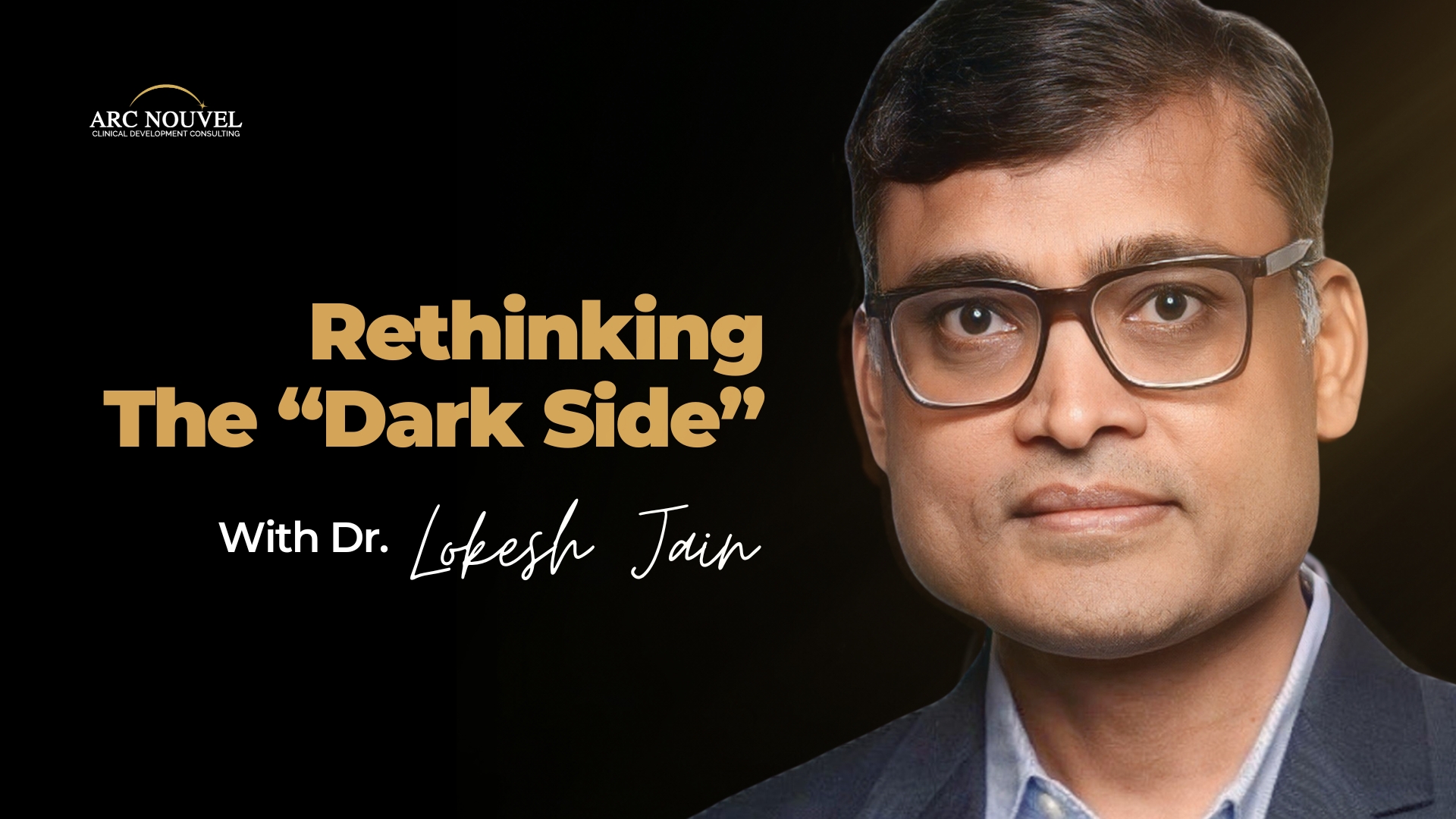
Few professionals have experienced this system from as many vantage points as Dr. Lokesh Jain. Over the course of his career, he has worked within the National Institutes of Health (NIH), the U.S. Food and Drug Administration (FDA), and the pharmaceutical industry.
His career offers a perspective that challenges the conventional narrative surrounding industry. He views the pharmaceutical industry not as a departure from patient-centered medicine, but as one of the most powerful ways to advance it.
Today he leads Clinical Pharmacology, Pharmacometrics, and Bioanalysis functions at a biotech company Merus NV, where his work focuses on determining how medicines should be used in patients, how they should be dosed, which patients benefit most, and how emerging clinical data can guide development in real time.
As he describes his current role, the work revolves around turning data into decisions that ultimately shape how therapies are used in the real world.
“We focus on identifying the right dose, the right dosing frequency, and the right patient subgroups,” he explains. “All of the work is about learning from the data that come through different phases of drug development and using that to inform decisions almost in real time.”
The goal, he says, is to integrate everything that can influence how a drug performs, from biomarkers and pharmacokinetics to patient characteristics such as body weight, demographics, and disease biology. “There is a common theme of learning from patient-specific information,” he notes. “We try to integrate that holistically and use it to make better decisions.”
Those decisions may not occur at the bedside, but their consequences reach thousands of bedsides around the world.
NIH and FDA: Two Holy Grails in Life Sciences
Dr. Jain’s perspective on industry was shaped long before he joined it. Early in his career, he worked at two institutions widely regarded as pillars of scientific credibility: the NIH and the FDA.
Each offered a different window into how medicines come into existence.
“The NIH and FDA are almost like two holy grails in life sciences,” he says. “One defines the gold standards of scientific research, and the other protects public health by evaluating new medicines.”
Working within those institutions provided insight into the scientific and regulatory frameworks that guide medicine. But it also revealed something else: a missing dimension of the process.
“I viewed that period as the first half of my experience in drug development,” he explains. “At those places we were evaluating new research ideas or conducting regulatory assessment of new drugs”. To him industryrepresented the second half of that journey, the place where ideas are transformed into therapies through execution, investment, and risk.
“It is where people take those ideas, put resources behind them, and execute them,” he says. “That part of the experience is essential if you want a complete understanding of drug development.”
Seeing the Full Picture
The decision to leave the FDA and move into industry was not driven by dissatisfaction. On the contrary, Dr. Jain describes his time there as both rewarding and intellectually rich.
During his final years at the agency, he served as a team leader overseeing multiple regulatory submissions, including several new drug applications. The position offered a broad view of development programs across an entire therapeutic area.
“However, the experience eventually shifted from active learning to a steady state,” he recalls. “At that stage it felt like I needed a new challenge.”
That realization revived his long-held desire to experience industry-led drug development.
“I always had in the back of my mind that I wanted to experience the other side of the coin,” he says.
The move, therefore, was less about abandoning one mission than about completing a broader journey.
Beyond the Perception of Dark Side”?
When Dr. Jain announced his plans to transition to industry, he encountered a familiar reaction from colleagues.
“Some people explicitly told me that I was going to the dark side,” he recalls with a smile.
This widely held perception reflects a belief that industry operates under fundamentally different motivations than academia or public institutions.
But for Dr. Jain, the remark never felt convincing.
Having worked at the FDA, he had already seen the extraordinary level of detail and scrutiny involved in regulatory submissions. Pharmaceutical companies, he knew, must document every aspect of a drug’s development, from pharmacology and toxicology to clinical outcomes and manufacturing processes.
“I understood where the perception came from,” he says. “But it was not a deterrent.”
What he saw instead was a system of complementary roles.
“One place ensures that ideas meet certain standards,” he explains, referring to regulatory oversight. “The other place is where those ideas are actually executed.”
The two functions, he believed, were not opposites but partners.
Moving Toward Patients, Not Away
Among the most common criticisms of physicians entering industry is the notion that they are leaving patient care behind.
Dr. Jain rejects that assumption.
After more than a decade of working in pharmaceutical development, he believes the relationship between industry and patient care is often misunderstood.
“My personal belief is that in the industry we are not moving away from patient care,” he says. “In many ways we are moving toward it.”
Drug development forces scientists and physicians to confront unmet medical needs at scale. Entire programs are built around diseases where existing therapies fall short.
“When companies decide where to invest resources, the starting point is usually an unmet need,” he explains. “That naturally brings you toward the patients who need help the most.”
The Science Behind a Dose
Within pharmaceutical development, dosing decisions carry enormous weight. Determining the right dose and schedule can influence both the success of a clinical trial and the safety of patients who will eventually receive the therapy.
Dr. Jain’s work sits precisely at this intersection.
As head of Clinical Pharmacology and Pharmacometrics, he and his colleagues analyze data from across the development pipeline to understand how drugs behave in different patient populations.
These analyses incorporate a wide range of information, from pharmacokinetic and pharmacodynamic relationships to biomarkers and clinical endpoints and demographic variables.
“The groundedness really comes from the data,” he says. “Data keeps us humble.”
In oncology especially, the stakes are high. Choosing the wrong dose or studying the wrong patient population can derail an otherwise promising therapy.
“As we move toward Phase III trials, these decisions become extremely critical,” he explains. “They can be the difference between success and failure, or between benefit and risk.”
To navigate that uncertainty, teams continually refine their analyses as new information emerges.
“We learn about a molecule at every stage,” he says. “And we keep improving our understanding as the data accumulate.”
Remembering the Human Face of Disease
Although pharmaceutical scientists often work far from clinical settings, certain experiences leave lasting impressions.
For Dr. Jain, one such memory comes from his time at the NIH, when the building where he worked housed both research laboratories and a cancer treatment center.
During that period, he encountered a patient with Kaposi’s sarcoma associated with HIV infection.
“I still remember seeing lesions all over the patient’s body,” he recalls. “The difficulty that patient was experiencing is something that stayed with me.”
The image has never faded.
Experiences like that serve as reminders of why drug development matters.
Over the years, additional sources of motivation have emerged: conversations with clinicians, presentations at scientific conferences, and even personal experiences within his extended family.
“You develop an intuitive sense of what patients are going through,” he says. “And that keeps you connected to the purpose of the work.”
Rather than weakening his commitment to medicine, the impact of successful therapies has strengthened it.
“The love toward my profession has grown over time,” he reflects.
Impact Beyond the Bedside
For clinicians, the rewards of medicine are often immediate. A physician may remove a tumor, stabilize a patient, or watch symptoms improve within days.
Industry operates on a different timescale.
Instead of witnessing change patient by patient, scientists may work for years before a therapy reaches the public.
But the scale of impact can be extraordinary.
Over the course of his career, Dr. Jain has contributed to the development of multiple therapies that ultimately reached patients, including treatments such as pembrolizumab, olaparib, selumetinib, and others.
“These drugs have had remarkable efficacy in patients who had unmet needs,” he says. “Seeing that patients can live longer and have better quality of life is incredibly rewarding. That is what keeps you going,” he adds.
Science in a Commercial World
The pharmaceutical industry is, by definition, a business. Critics often worry that commercial incentives could compromise scientific rigor.
Dr. Jain acknowledges the economic realities of drug development but believes the relationship between science and business is frequently misunderstood.
“There are discussions with commercial teams about priorities and investments,” he says. “But I have never experienced a situation where something that made sense for patients could not be justified commercially.”
Instead, most debates involve timing and prioritization.
“In oncology, many drugs can work across multiple tumor types,” he explains. “Sometimes you begin with the indications that affect larger patient populations before moving to smaller ones.”
Multidisciplinary collaboration often strengthens the process rather than weakening it.
“Hearing perspectives from different teams can actually improve decision-making,” he says. “It brings in factors that a scientist alone might not consider.”
Why the System Works Only Together
Having worked across academia, regulatory science, and industry, Dr. Jain has come to view the healthcare ecosystem as fundamentally interconnected.
“None of the therapies we see today would exist without industry executing the development,” he says. “But they also would not exist without regulators validating the data or without academic research generating the original ideas.”
When those relationships function well, they produce breakthroughs that define modern medicine. If they break down, the consequences could be severe.
“We would lose the flow of new ideas from research institutions,” he warns. “We would lose the ability to execute those ideas at scale, and we would lose the independent verification that protects patients.”
For him, the idea that these institutions stand in opposition simply does not reflect reality.
“It is an interconnected world,” he says.
Advice to the Next Generation
For young clinicians and scientists considering careers in pharmaceutical development, Dr. Jain offers straightforward guidance.
The most important step, he believes, is to question assumptions.
“Ask a lot of questions,” he says. “Do not simply rely on what others say.”
Every career path carries its own strengths and limitations, and no single route defines what it means to contribute to medicine.
“Each place has its own role,” he reflects. “All of them are important.”
Above all, he encourages curiosity and intellectual independence.
“Use data wisely,” he says. “And never stop asking questions.”
Rethinking the “Dark Side”
If Dr. Jain were asked today whether his career move represented a step toward the dark side of medicine, his answer would be clear.
“At the time I simply acknowledged the comment,” he recalls. “But after years in the field, I believe that perception is wrong.”
Pharmaceutical development, he argues, is not a departure from healthcare but one of its central pillars. It is the place where ideas become therapies, where risk and innovation intersect, and where scientific discoveries ultimately reach the patients who need them.
“You need to see both sides to have the full perspective,” he says.
Viewed through that lens, the phrase “dark side” begins to lose its meaning.
What remains instead is a shared mission, one that spans laboratories, regulatory agencies, hospitals, and biotech companies alike.
A mission to advance medicine, and ultimately, to improve human lives.