

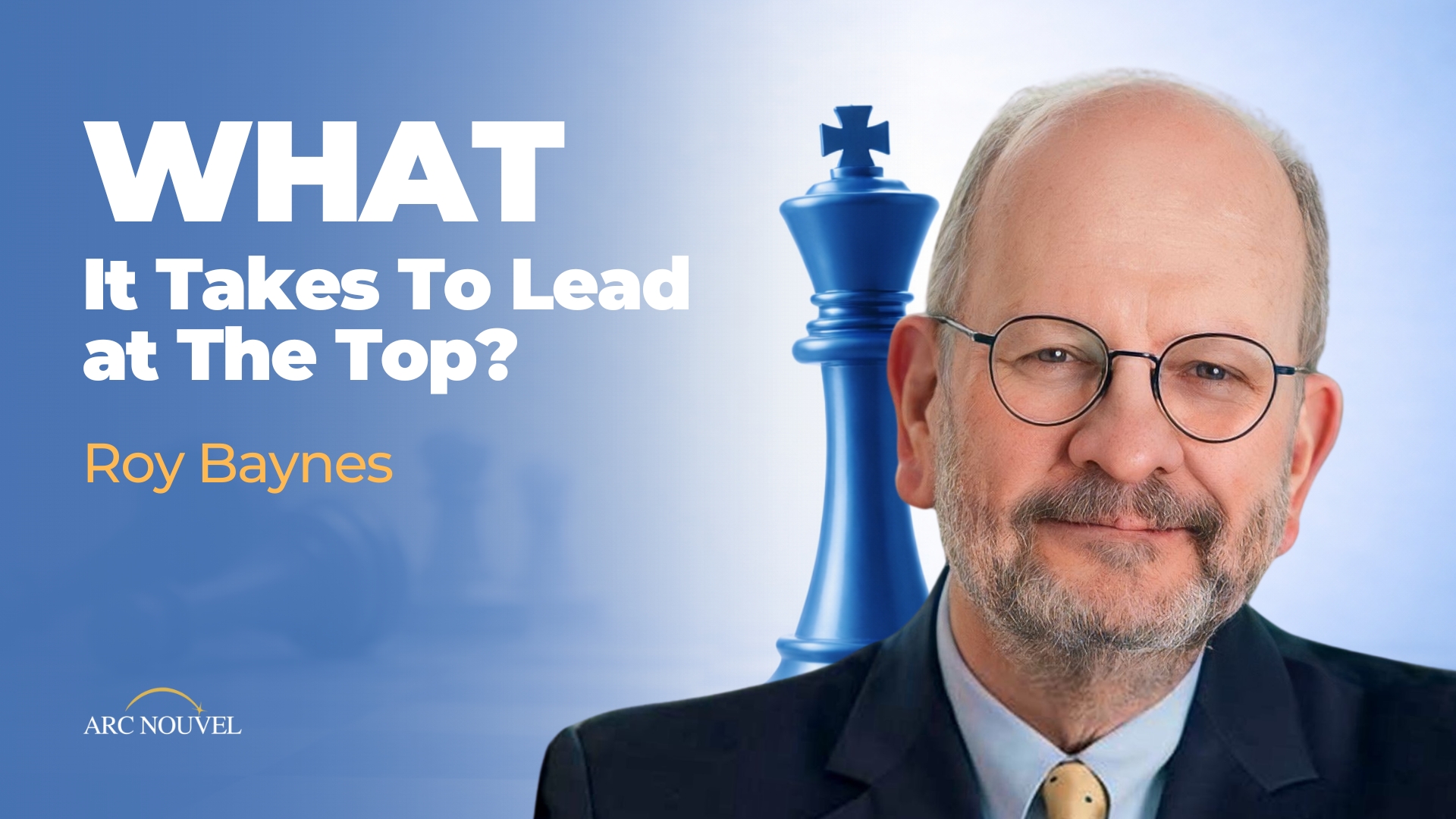

There is one idea that seems to sit at the center of Dr. Roy Baynes’s career, and perhaps at the center of his leadership philosophy too: important work must remain anchored to human benefit. In an era that can sometimes confuse scale with significance, Dr. Baynes returns to a simpler and sterner standard. The real test of a medicine is not the elegance of the science alone, nor the size of the organization behind it, but whether it meaningfully changes the trajectory of a patient’s life. That belief has shaped not just the choices Dr. Baynes made, but the kind of leader he became. And it is the right place to begin when asking what it takes to lead at the top.
Dr. Baynes’s career spans two demanding worlds that few people navigate at the highest level: academic medicine and global biopharmaceutical development. Trained as a physician-scientist in hematology, oncology, and stem cell transplantation, Dr. Baynes spent roughly a quarter century in academic medicine before moving into industry, where he would spend another quarter century helping develop medicines that changed clinical practice. He went on to hold major leadership roles at Amgen, Gilead, and Merck, where he served for about a decade as Chief Medical Officer and Head of Clinical Development. Even after formally “retiring,” he stepped straight into another full-time role and today serves as Chief Medical Officer of a younger company, Eikon Therapeutics, building clinical development around new scientific platforms.
“I’ve always been driven by the idea of bringing innovative medicines, as well as innovative treatment strategies, forward to address grievous medical conditions,” Dr. Baynes shares. “It became clear to me that industry was really, in many ways, best configured to advance breakthrough and first-in-class medicines for the benefit of patients.”
That sense of direction began early. Dr. Baynes did not drift into medicine, and he did not later drift into leadership. Both came through a durable sense of vocation. His story is unusual not because it is linear in the simplistic sense, but because its purpose remained stable as the scale of responsibility grew.
“From a very early age, I knew I wanted to be a physician. That was a lifelong ambition… But essentially, just all along knew I wanted to do something important in medicine.”
That may be the first lesson in leadership at the highest level: titles may change, institutions may change, but the strongest careers are often built around a conviction that does not.
Learning Medicine in a Harsher Era
Dr. Baynes entered oncology at a time when the field looked very different from the one rising leaders know today. Treatments were often more toxic, less specific, and far harder for patients to endure. Much of cancer care was not only about attacking disease, but about helping patients survive the treatment itself. For someone who trained in hematology, oncology, and stem cell transplantation, that reality was not abstract. It shaped daily work, clinical judgment, and the emotional atmosphere of the profession.
“In my early academic work, we were really learning our way in terms of treating malignant diseases, particularly using chemotherapy, radiation therapy, and most of what we did was to treat the side effects of treatment,” he says. “A lot of the work, and particularly in stem cell transplantation, was getting patients through the insult of the treatment so that they could recover and hopefully benefit from that treatment.”
That experience matters because it gave Dr. Baynes historical perspective. He witnessed the field before precision was the norm. He saw why supportive care once occupied such a central place in oncology: when therapies are severe, the difference between benefit and harm can be frighteningly narrow. His early industry role leading supportive care was not incidental. It reflected a physician who understood, from experience, that effective medicine could never be judged only by its intended target while ignoring the human cost of reaching it.
“These were all supportive care approaches, and for many years, that dominated cancer treatment, because frankly, the treatments were so toxic. But fortunately, the world has evolved. We’ve moved to ever smarter medicines, ever more specific medicines, and frankly, ever more tolerable medications,” Dr. Baynes says.
Because Dr. Baynes has seen that arc firsthand, his optimism about oncology carries more weight than easy enthusiasm. He knows what progress corrected. He knows how much suffering was once built into standard treatment. And that perspective gives his leadership a deeper seriousness. He is not impressed by novelty for its own sake. He is impressed by advances that genuinely improve what it means for a human being to go through cancer care.
Discipline, Standards, and the Making of a Leader
Ask Dr. Baynes what early years taught him, and he does not begin with charisma, strategy, or influence. He begins with discipline. Medical education, in his telling, does more than train skill. It engrains seriousness. It teaches that details matter, that accountability cannot be outsourced, and that the work demands a standard of effort that becomes part of one’s character.
“The discipline of medical education and medical training really is pretty rigorous. And it causes the fundamentals, including commitment and integrity and hard work, to be ingrained in the person…There really are no shortcuts, you really have to sweat the details… You can’t outsource this, this is something you have to take on yourself.”
The language is striking because it is so unadorned. Dr. Baynes does not glamorize excellence. He treats it as a condition of responsibility. That is a notably mature way to speak about leadership in an era that often overvalues style. What comes through in his answers is that durable leadership is not made from visible performance alone. It is built from habits of rigor that are usually formed long before anyone notices them.
Those habits, for Dr. Baynes, began at home as well. He credits his parents, both shaped by the Great Depression, with instilling hard work, honesty, ambition, and a duty to serve a greater good. Religious schooling reinforced those principles.
“Both of my parents were raised during the Great Depression. And this really led them to emphasize the importance of hard work, of honesty, of trying to serve a greater good. I went to religious day school, which again emphasized the importance of many of these concepts. These are deeply ingrained, and they’ve served me well through my journey.”
The result was an internal standard that long predated the high-level roles for which he later became known. Standards are not improvised at the summit. They are formed early, tested often, and carried upward. By the time a person is leading large teams and consequential programs, character is not being invented. It is being exposed.
What Leadership Looks Like when Pressure Arrives
If there is one theme Dr. Baynes returns to repeatedly, it is the necessity of remaining calm under pressure. In his world, crises are not rare interruptions; they are part of the territory. Drugs fail. Data disappoint. Unexpected safety signals appear. Programs stall. Organizations misfire. In such moments, Dr. Baynes believes the leader’s job is not to intensify emotion, but to stabilize judgment.
“What is most valued in academics and clinical medicine and industry, and particularly drug development, as well as one’s personal life, is remaining calm during adversity and managing disappointments. I learned early on that it’s always important to try and be a steady pair of hands. You always need to work the problem.”
That phrase, a steady pair of hands, says a great deal about how Dr. Baynes sees leadership. Not as theatrical certainty. Not as domination. Not even as optimism in the sentimental sense. Instead, leadership begins with remaining usable when things go wrong. Others must be able to rely on your judgment when the path is unclear. That requires calm, but also perseverance and accountability.
“Setbacks really require one to, again, exhibit steady hands, always try and work the problem. Perseverance is really important. And taking full accountability…You’re not going to get it right all the time… be very measured in accepting defeat… But equally important is being humble in victory,” and then he adds “If you are able to succeed, be very humble about it because you’re only minutes away from your next major challenge.”
Dr. Baynes is realistic enough to acknowledge that not every problem can be solved. Some setbacks arise from chance; some result from mistakes. But even that distinction does not release the leader from responsibility. His emphasis remains the same: understand the problem, work it honestly, take accountability, and maintain proportion.
“If the buck stops with you, make sure that you understand the problem. Make sure you work the problem. Really make every effort to try and address the problem.”
Clarity, Teams, and the Discipline of Execution
Dr. Baynes’s leadership philosophy becomes more concrete when he speaks about how organizations should actually function. In his account, good leadership begins with clarity. People need to know how the organization works, where it is going, and what will be required of them. Confusion is not a minor inconvenience in high-stakes work; it is a threat to execution.
“For teams to really be well led, the leader has to articulate organizational clarity. There needs to be consistency of message. And you can’t wake up one day and say, we’re headed north, and then the next day you’re headed west.”
What distinguishes Dr. Baynes’s approach is that clarity does not come at the expense of listening. He wants leaders to hear people carefully, but he does not confuse listening with indecision. Teams should be heard; they should not be trapped in endless consensus. At some point, someone must decide and the organization must move.
“You have to articulate a very clear vision of what the future looks like, or what you’d like it to look like, and what has to be done to get there. You also have to be a listening leader… everyone needs to be heard. At the end of the day, a decision has to be made.”
He is also unwavering about the importance of teams. In Dr. Baynes’s world, almost everything meaningful is a team sport. The leader’s responsibility is to build the strongest possible team, define an actionable strategy, and insist on results. Smart people alone are not enough. Execution is the real test.
“As a leader, you need to know what’s going on in your business, and you need to hold everyone accountable for knowing what’s going on in their parts of the business. Build the best teams. And then once you’ve built the best team, chart a course for that team… and then everyone needs to understand we have to deliver results.”
That combination, clarity, consistency, listening, decisiveness, and execution, helps explain why Dr. Baynes moved so effectively from physician and scientist into leadership of complex organizations.
The Keytruda Chapter
Nowhere does Dr. Roy Baynes’s philosophy come into sharper focus than in the story of Keytruda and Merck’s resurgence around it. He tells it not simply as the story of a breakthrough medicine, but as a lesson in institutional recovery. A transformational drug, he makes clear, is never enough on its own. A company must be able to recognize its importance, understand where its own machinery is failing, and rebuild itself quickly enough to act. As Baynes recalls, Roger Perlmutter returned to Merck, “spotted this drug called Keytruda and immediately knew this was going to be a really important medicine,” but he was also “facing the challenge of an organization that seemed to have lost its way and was not configured to win.”
When Baynes arrived in late 2013, he found that the problem extended well beyond a single oncology asset. Merck still had scientific strength, but its development organization had been undercut by excessive programmatic outsourcing and slowed by excessive matrix structures, layers of management, weak operational capability, and decision-making that had lost speed and clarity. Baynes describes this with characteristic precision:
“The more matrixed an organization is, the harder it is to get work done, because essentially, you no longer are nimble. The organization really had no muscle memory as to how to do this. So, we had to re-build it.”
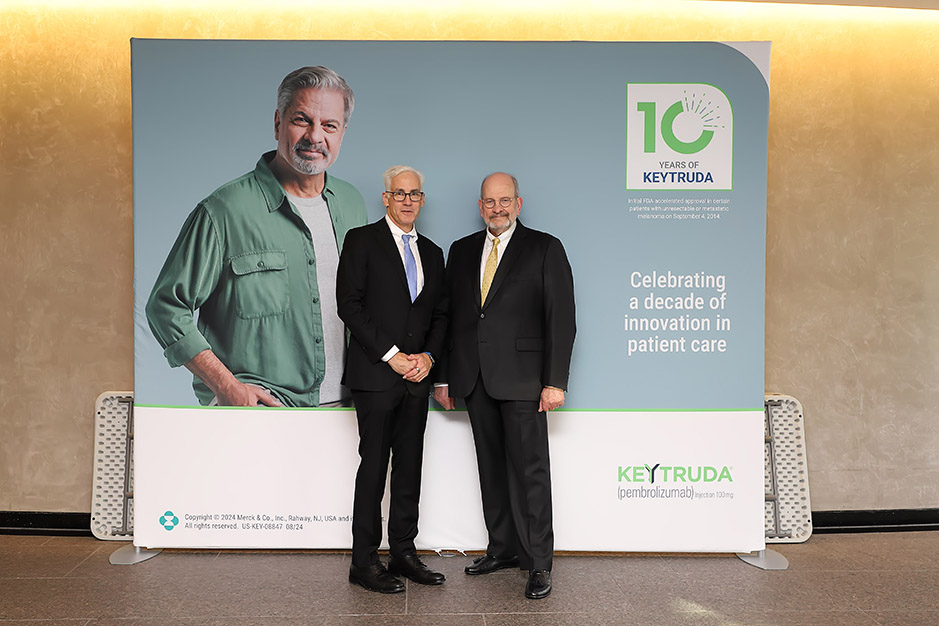
Dr. Roy Baynes with Dr. Eric Rubin at the 10-year anniversary (2024) of the first U.S. approval of Keytruda.
What made the opportunity extraordinary was that Merck was not working blindly. Early clinical work had already begun to show where Keytruda was likely to matter most, giving the company a development roadmap across multiple tumor types. But a roadmap is only useful if an organization can follow it. Baynes and his colleagues therefore undertook not just a program effort, but a large-scale rebuilding effort: recruiting heavily, restoring internal capability, modernizing quantitative science, strengthening regulatory and clinical operations, and reorganizing around disease-focused expertise.
“We just had to recruit in an enormous number of skilled people. With this team in place, we proceeded to execute like I think no one’s ever seen before.”
Baynes is also careful in the way he tells the story. He repeatedly names the people who helped make that execution possible, resisting any temptation to turn the chapter into a tale of solitary heroism. That choice reflects a deeper belief: leadership at this level is not self-display, but team construction. The real achievement was not only that Keytruda changed Merck’s trajectory, but that the company rebuilt the tools, systems and talent needed to carry that opportunity forward at scale.
The most lasting lesson he draws from that period is about succession. For Baynes, leadership is incomplete if it does not prepare the next generation to take over without loss of momentum.
“A key part of leadership is actually planning for the next leaders,” he says. “Succession and mentoring successors are probably one of the most important things you do as leaders in a company.”
What He Looks For, and What Drives Him
Ask Dr. Baynes what he looks for in younger talent, and his answer is telling. He is looking for signs of durability: people who can commit, finish what they start, follow a coherent path, develop real expertise, work well with others, and bring energy to difficult work.
“The first thing I look at is does the person appear to commit to what are called long lines? And by that I mean, if you start something, can you see it through and finish it? I really like people who are optimistic. And I’m really attracted to people who have fire in the belly.”
He is equally direct about culture. Honesty matters because it creates trust. “Honesty breeds trust. And for me, trust is also a really important quality.” Accountability matters because someone must own the problem. Early escalation matters because hidden issues become worse with time. “If you are in a position where you encounter a problem, you don’t know how to fix it, escalate it quickly. Don’t let things swirl around for days and days.” These are practical management principles, but in Dr. Baynes’s framework they also reflect moral seriousness.
And what, after everything Dr. Baynes has seen and built, continues to drive him? The answer returns us to the idea that opened his story. The work remains meaningful because medicine, at its best, is still a way of improving the human condition in ways that are tangible, not theoretical.
“When a pivotal trial reads out positive, then you know that survival has improved or quality of life has improved. There’s nothing more gratifying than that. And I don’t think it’s necessarily selfish gratification. It’s the notion that actually you achieve your goal of essentially improving the human condition… So, I never get tired of that. And, you know, unfortunately, those highs come very infrequently, but when they do occur, they are wonderful. “
He is equally clear about where the field’s energy should go: not toward marginal novelty, but toward medicines with unmistakable clinical effect.
“We should be spending more time bringing forward first-in-class medicines with big effect sizes that change the trajectory for human beings.”
Baynes quotes an early Merck CEO, George Merck ” We try never to forget that medicine is for the people. It is not for the profits. The profits follow, and if we have remembered that, they have never failed to appear.”
So, what did it take for Dr. Roy Baynes to lead at the top? It took early conviction, rigorous training, standards formed before success, calm under pressure, seriousness about teams, discipline in execution, generosity in succession, and a lasting refusal to separate ambition from usefulness. His story is not only about achievement. It is about standards held consistently across decades, sectors, and scales of responsibility.
And perhaps that is the deepest answer of all. Leadership at the top is not finally about status. It is about stewardship, of science, of institutions, of teams, and above all of work that matters to people.